Medical note: This article is for general education only. It is not a diagnosis or personal treatment plan. If someone has overdose symptoms, seizures, suicidal thoughts, psychosis, severe aggression, confusion, or severe alcohol or sedative withdrawal, seek urgent medical help first.
Reviewed by: Dr. Mushfiqur Rahim [MBBS, CCD,(BIRDEM)CCH Former EMO(TMSS Medical College)]
What happens inside a de-addiction center in Bangladesh is usually a step-by-step treatment process. A proper center should give the patient a structured and safe environment. The patient may go through admission assessment, detox or withdrawal management, counseling, group therapy, daily routine, family sessions, relapse-prevention planning, and aftercare support. The goal is not only to stop drugs for a few days. The goal is to help the person understand addiction, rebuild habits, manage cravings, and return to family, study, or work life safely. But not every center follows the same quality standard. Families should check licensing, medical staff, safety rules, and treatment approach before admission.
Why People Go to a De-Addiction Center
Families usually search for a de-addiction center when the situation at home becomes unsafe, stressful, or hard to manage. Addiction can affect a person’s health, behavior, money, study, job, and family relationships.
At Mayer Ashroy, we often see that families do not come for help after the first problem. They usually come after many failed attempts to control the situation at home.
When Home Control Is No Longer Working
A family may start looking for inpatient rehab Bangladesh, outpatient rehab Bangladesh, or a residential rehab center Bangladesh when they notice signs like:
- The person has tried to quit many times but keeps going back.
- They have withdrawal symptoms when they stop.
- They lie about money, drugs, friends, or where they go.
- They steal from home or sell things.
- They become aggressive, isolated, or very secretive.
- Their study, job, marriage, or family life starts breaking down.
- They take risky decisions while using drugs.
- They mix yaba, alcohol, cannabis, heroin, sleeping pills, or other substances.
- They stop caring about sleep, food, hygiene, or responsibility.
These signs do not mean the person is “bad.” They may mean the person needs structured addiction treatment.
Why Addiction Needs Structured Treatment
Addiction is not only a habit. It can affect the brain, behavior, cravings, health, decision-making, and family life. CDC describes substance use disorder as a disease, not a character flaw, and says recovery may involve medicine, therapy, and sometimes a rehabilitation facility.
This is why blaming, shouting, locking someone at home, or giving threats usually does not solve the problem. A good rehab treatment process focuses on safety, medical needs, counseling, family support, and relapse prevention.
Step-by-Step: What Happens After Admission?
The de addiction center process should not begin with punishment. It should begin with listening, assessment, and safety planning.
Step 1 — First Phone Call or Consultation
The first step is usually a phone call or consultation with the family. During this call, the center may ask:
- What substance is being used: yaba, alcohol, heroin, cannabis, sleeping pills, phensedyl, injectable drugs, or mixed substances
- How long the person has been using
- How often they use
- Whether they tried to quit before
- Whether they have withdrawal symptoms
- Whether they have medical problems
- Whether they have depression, anxiety, psychosis, or suicidal thoughts
- Whether they are aggressive or violent
- Whether there is a risk of self-harm
- Whether the patient is willing or resistant
- Whether the family can safely bring the patient
This first call helps the team understand whether routine rehab admission is enough or whether urgent hospital care is needed first.
Step 2 — Intake and Assessment
When the patient arrives, the center should collect basic information and check the patient’s condition. This may include:
- Name, age, address, and family contact
- Drug-use history
- Alcohol-use history
- Medical history
- Mental health history
- Current medicines
- Previous rehab history
- Previous relapse history
- Physical checkup
- Risk of withdrawal
- Risk of self-harm, aggression, or running away
Mayo Clinic says diagnosis of substance use disorder needs a full evaluation, often by a psychiatrist, psychologist, or licensed alcohol and drug counselor. Mayo Clinic also advises patients to be honest about drug use, medicines, supplements, and symptoms so providers can decide what care may be suitable.
Families should not hide serious symptoms. If the patient has seizures, suicidal thoughts, severe aggression, liver disease, kidney disease, heart problems, or psychosis, the center must know.
Step 3 — Treatment Plan
A safe center should not use the same plan for every patient. The treatment plan may depend on:
- Type of substance
- Severity of addiction
- Withdrawal risk
- Physical health
- Mental health condition
- Age
- Family situation
- Previous relapse history
- Motivation level
- Safety risk
- Whether inpatient or outpatient care is better
The best rehab program Bangladesh families can choose is not always the most expensive one. It is the program that matches the patient’s real medical, psychological, and family needs.
Detox: The First Medical Stage of Rehab
Detox is one of the first stages in the addiction treatment process Bangladesh families ask about. But detox must be understood clearly.
What Detox Means
Detox is the stage where the body adjusts after stopping drugs or alcohol. During this time, the person may feel:
- Strong cravings
- Anxiety
- Sleep problems
- Sweating
- Shaking
- Body pain
- Stomach problems
- Mood swings
- Irritation
- Depression
- Weakness
- Anger
- Confusion
Withdrawal symptoms can be different for each substance. Alcohol, sedatives, opioids, yaba, cannabis, and sleeping pills do not affect everyone in the same way.
Why Detox Should Be Supervised
Some withdrawal symptoms are uncomfortable. Some can be risky. This is especially true for alcohol, sedatives, opioids, and mixed substance use.
Mayo Clinic explains that detox, also called withdrawal therapy, aims to help the person stop the addictive drug as safely as possible. Some people may be treated as outpatients, while others may need a hospital or residential treatment center.
Families should be careful if a center says detox is simple for everyone. Detox needs proper observation, especially when the patient has a medical or mental health risk.
What Medical Staff May Monitor
During detox, medical staff may monitor:
- Sleep
- Blood pressure
- Pulse
- Appetite
- Body pain
- Withdrawal symptoms
- Mood changes
- Cravings
- Risk of self-harm
- Risk of aggression
- Medicine side effects
- Confusion or abnormal behavior
A center should also have a clear emergency plan if the patient becomes medically unstable.
Detox Is Not the Full Treatment
Detox alone does not solve addiction. It only prepares the body for the next stage of treatment.
NIDA’s treatment principles say effective addiction treatment often needs many parts, including medical, psychological, social, and family support. NIDA also says medically assisted detox is only the first stage and by itself does little to change long-term drug use.
So, if a patient becomes drug-free for a few days but does not receive counseling, behavior work, family support, and aftercare planning, relapse risk can remain high.
What Is Daily Life Like Inside a Rehab Center?
Many families want to know about life inside rehab center settings before admission. A good rehab center does not allow the patient to sleep all day, use phones freely, or stay without structure. A daily routine is part of treatment.
A Typical Daily Routine May Include
| Time | Activity |
| Morning | Wake up, hygiene, prayer or meditation, breakfast |
| Late morning | Doctor checkup, counseling, group session |
| Afternoon | Education session, skill-building, rest, physical activity |
| Evening | Reflection session, family update if allowed, reading or prayer |
| Night | Dinner, quiet time, sleep routine |
This drug rehab daily routine can vary by center. But the purpose is usually the same: to bring discipline, safety, and stability back into the patient’s life.
Why Routines Are Strict
Rehab routines are strict because addiction often creates chaos. A structured routine helps:
- Reduce triggers
- Keep patients away from drug access
- Rebuild discipline
- Improve sleep
- Improve eating habits
- Teach responsibility
- Reduce conflict
- Support emotional control
Rules and routines are not meant to punish the patient. They are meant to protect recovery.
Are Phones Allowed?
Phone rules vary by center. Many full time rehab center Bangladesh programs restrict phone access during early treatment. This can help reduce triggers, conflict, outside pressure, drug contacts, and emotional stress.
Families should ask before admission:
- Are phones allowed?
- When can the patient call home?
- Can the family contact the team?
- What happens in an emergency?
- Are video calls allowed?
Can Family Members Visit?
Family visit rules also vary. Some centers allow visits after a stabilization period. Some have fixed family counseling days. Some may restrict visits during detox or early treatment if the patient is unstable.
Families should ask the center clearly before admission.
Counseling and Therapy Inside a De-Addiction Center
A proper drug rehabilitation program Bangladesh should include counseling, not only isolation from drugs. Counseling helps the patient understand why addiction happened and how to live differently after discharge.
Individual Counseling
One-to-one counseling helps the patient explore:
- Why they used substances
- Emotional triggers
- Peer pressure
- Anger
- Guilt
- Shame
- Trauma
- Stress
- Family conflict
- Relapse patterns
- Poor decision-making
- Fear of life after rehab
This is where the patient can speak privately with a trained counselor or mental health professional.
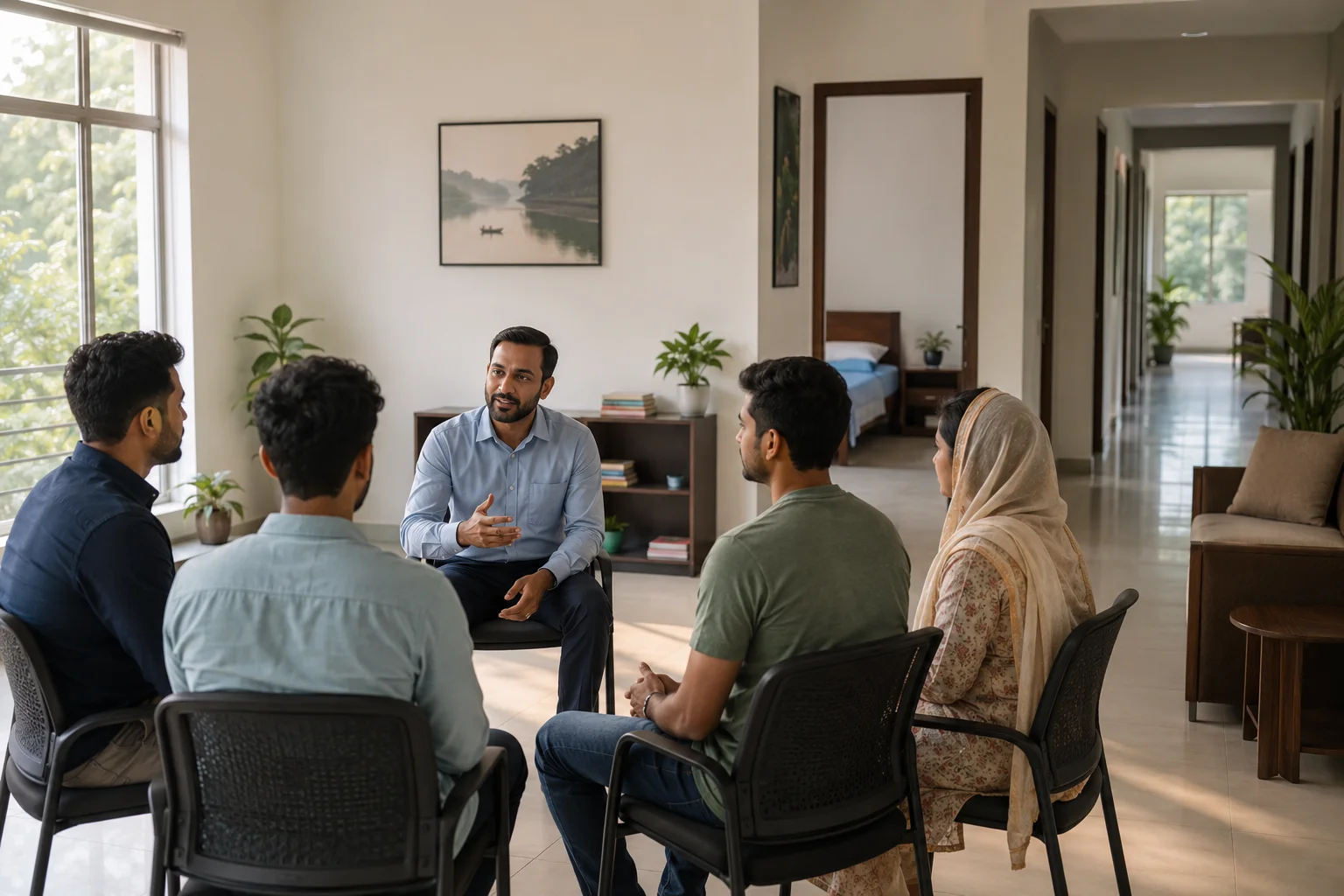
Group Therapy
Group therapy helps patients learn from others. It can help them:
- Understand they are not alone
- Practice honest communication
- Learn accountability
- Hear real recovery stories
- Share struggles safely
- Build social confidence
- Learn from relapse mistakes
Group sessions should be respectful and safe. They should never be used to shame or humiliate patients.
Family Counseling
Family counseling is very important in Bangladesh because families are usually deeply involved in admission, payment, care, and recovery.
Family counseling may help parents, spouses, siblings, or guardians learn:
- How addiction works
- How to rebuild trust
- How to set boundaries
- How to avoid enabling behavior
- How to stop blaming
- How to support recovery after discharge
- How to manage anger and disappointment
- How to plan home life after rehab
Addiction affects the whole family. So recovery often needs family healing too.
Psychoeducation
Psychoeducation means teaching the patient and family about addiction and recovery. Topics may include:
- Cravings
- Withdrawal
- Mental health
- Drug effects
- Relapse warning signs
- Triggers
- Healthy routines
- Communication
- Stress control
- Aftercare
Mayo Clinic notes that treatment programs often include individual, group, or family therapy, relapse prevention, and different levels of care such as outpatient, residential, and inpatient programs.
Medical Care and Medicines During Treatment
Medicines may be used in rehab, but only when needed and only under qualified medical supervision.
Are Medicines Used in Rehab?
Sometimes, yes. Medicines may be used for:
- Withdrawal symptoms
- Sleep problems
- Anxiety
- Depression
- Cravings
- Mood problems
- Psychosis
- Co-occurring psychiatric conditions
- Physical health problems
But medicine is not the same for every patient. A person using yaba may need a different plan from a person using alcohol, heroin, or sleeping pills.
Medicines Are Not the Same as Replacing One Addiction With Another
Some families fear that addiction medicine means “replacing one drug with another.” That is not always true.
SAMHSA explains that medications for alcohol and opioid use disorders can relieve withdrawal symptoms and cravings. SAMHSA also states that evidence-based medications do not simply substitute one drug for another.
Medicines should be used carefully, with counseling and follow-up. They should not be given without proper assessment.
Who Should Prescribe Medicines?
Medicines should be prescribed by a qualified professional, such as:
- Psychiatrist
- Medical doctor
- Qualified addiction physician
- Doctor trained in substance-use treatment
Families should ask:
- Who prescribes medicines?
- How often does the doctor visit?
- Are side effects monitored?
- Are emergency symptoms handled?
- Will we receive a medicine plan at discharge?
Avoid taking addiction medicines from unqualified people or without medical supervision.
Rules Patients Usually Follow Inside Rehab
Rules are part of how rehab centers work. A center without clear rules can become unsafe.
Common Rehab Rules
Patients may need to follow rules such as:
- No drugs or alcohol
- No violence
- No threats
- No unauthorized phone use
- No outside food or medicine without approval
- Attend counseling and group sessions
- Follow sleep and meal routines
- Respect other patients
- Maintain hygiene
- Cooperate with testing if required
- Follow visitor rules
- Avoid abusive language
- Keep personal space clean
Why Rules Matter
Rules are not punishment. They protect safety, reduce relapse triggers, and create a stable recovery environment.
A proper center should also have rules for staff. Patients should be treated with dignity. Physical abuse, forced sedation, humiliation, and unsafe restraint should not be accepted as “treatment.”
How Long Does Rehab Take in Bangladesh?
Rehab length can vary. No ethical center should promise the same recovery time for every person.
Short-Term vs Long-Term Programs
Possible ranges may include:
- Short detox or stabilization: a few days to a few weeks
- Residential rehab program: several weeks to several months
- Long-term recovery support: months or longer after discharge
Some patients need inpatient care. Some may continue with outpatient addiction counseling Dhaka services after discharge. Some may need outpatient rehab Bangladesh support if they are stable and motivated.
What Affects Treatment Length?
Treatment length may depend on:
- Type of substance
- Duration of use
- Withdrawal risk
- Mental health condition
- Physical health
- Family support
- Previous relapses
- Patient motivation
- Safety risk
- Center’s treatment model
Why Leaving Too Early Can Increase Relapse Risk
Leaving too early can be risky because recovery needs time. The body needs time to stabilize. The mind needs time to manage cravings. The family needs time to prepare. The patient needs time to rebuild sleep, food, hygiene, honesty, and daily responsibility.
NIDA notes that remaining in treatment for an adequate period is important, and recovery can require continuing care or repeated episodes of treatment.
What Happens After Detox?
Many families think detox is the main treatment. It is not. After detox, the deeper recovery work begins.
Habit Rebuilding
After detox, the patient may work on:
- Sleep routine
- Food habits
- Personal hygiene
- Time management
- Exercise
- Emotional control
- Prayer or reflection
- Reading
- Communication
- Responsibility
These small habits matter because addiction often damages daily discipline.
Trigger Management
In Bangladesh, common triggers may include:
- Old friends
- Local drug spots
- Family conflict
- Unemployment
- Stress
- Easy access to yaba, alcohol, or sedatives
- Shame after returning home
- Loneliness
- Money in hand without accountability
- Too much free time
A good counselor helps the patient identify personal triggers and make a plan to avoid or manage them.
Relapse Prevention Plan
A relapse prevention plan may include:
- Warning signs
- Emergency contact person
- Follow-up counseling dates
- Avoiding old circles
- Family boundaries
- Work or study reintegration
- Medicine plan if needed
- Sleep and routine plan
- What to do if cravings return
- What to do if relapse happens
Relapse prevention should be practical. It should match the patient’s real home and social environment.
What Role Does the Family Play?
In Bangladesh, the family often plays a major role before, during, and after rehab. A patient may stay at the center for a limited time, but the family environment continues after discharge.
Before Admission
Before admission, the family can help by:
- Sharing accurate history
- Not hiding serious symptoms
- Bringing medical records
- Bringing current medicines
- Asking about licensing
- Asking about doctors
- Understanding costs
- Understanding rules
- Asking about emergency handling
- Preparing the patient calmly if possible
During Treatment
During treatment, the family may join:
- Counseling sessions
- Progress meetings
- Education sessions
- Visitation days
- Discharge planning
Family members should avoid blaming the patient during visits. The goal is to support recovery, not reopen fights.
After Discharge
After discharge, the family can help with:
- Routine
- Accountability
- Emotional support
- Avoiding blame
- Keeping drugs and alcohol away
- Monitoring relapse signs
- Encouraging follow-up sessions
- Helping with work or study structure
- Setting healthy boundaries
Support does not mean giving the patient unlimited money, freedom, or excuses. Support means helping recovery while keeping clear boundaries.
How to Choose a Safe De-Addiction Center in Bangladesh
Choosing a safe center is one of the most important decisions a family can make.
Check DNC License
Families should ask:
- Is the center licensed by the Department of Narcotics Control?
- Can they show the license?
- Is the license valid?
- Is the facility approved for addiction treatment?
- Is the license for counseling, treatment, rehabilitation, or all relevant services?
The Department of Narcotics Control website lists an application form for licensing drug addiction counseling, treatment, and rehabilitation centers. It also lists the 2021 rules for establishing and operating private addiction treatment, rehabilitation, and counseling centers. Families should verify licensing directly instead of relying only on verbal claims.
Check Medical Staff
Ask:
- Is there a psychiatrist?
- Is there a medical officer?
- Are nurses available?
- Who handles detox?
- How often does a doctor visit?
- What happens in an emergency?
- Is there a hospital referral plan?
Check Counseling Staff
Ask:
- Are counselors trained?
- Are individual sessions available?
- Are group sessions available?
- Is family counseling included?
- Is relapse-prevention planning included?
- Are mental health issues screened?
Check Safety and Living Conditions
Ask:
- Are rooms clean?
- Are bathrooms safe?
- Is food proper?
- Is drinking water safe?
- Are patients monitored at night?
- Is there an emergency plan?
- Is physical abuse banned?
- Is forced sedation banned?
- Are visitor rules clear?
- Are patients treated with dignity?
Check Transparency
Ask for clear information about:
- Full cost
- Program length
- Refund policy
- Medicine cost
- Doctor visit cost
- Testing cost
- Family visit rules
- Discharge planning
- Aftercare support
A safe center should explain these things before admission.
Common Myths About Rehab in Bangladesh
Myth 1 — Rehab Means Punishment
Reality: A proper center should provide treatment, structure, safety, and support. Rehab should not be a place for punishment or abuse.
Myth 2 — Detox Alone Is Enough
Reality: Detox is only the first stage. Counseling, behavior change, family work, relapse prevention, and aftercare are also important.
Myth 3 — Addiction Can Be Solved by Willpower Only
Reality: Motivation matters, but many people need medical and psychological support. Addiction can affect the brain and behavior, so treatment often needs structure and professional care.
Myth 4 — Families Should Hide Addiction
Reality: Hiding addiction can delay treatment and increase harm. Families should seek help early and protect the patient’s privacy with responsible professionals.
Myth 5 — One Rehab Stay Guarantees Permanent Recovery
Reality: No ethical center should promise 100% recovery or permanent cure. Recovery often needs follow-up, lifestyle change, family support, and relapse-prevention planning.
What Happens Before Discharge?
Discharge should not be sudden. A responsible center should prepare the patient and family before the patient returns home.
Progress Review
Before discharge, the team may review:
- Craving control
- Behavior change
- Sleep
- Mental health
- Family readiness
- Relapse risk
- Home environment
- Patient motivation
- Work or study plan
- Medicine needs
Discharge Plan
A discharge plan may include:
- Follow-up dates
- Counseling schedule
- Medicine plan if any
- Family instructions
- Emergency contact
- Work or study reintegration
- Relapse warning signs
- Trigger management plan
- Rules for money, phone, and old friends
Aftercare
Recovery continues after leaving the center. Aftercare may include:
- Follow-up counseling
- Support groups
- Family meetings
- Phone follow-ups
- Relapse-prevention sessions
- Psychiatric follow-up if needed
- Lifestyle planning
Mayo Clinic notes that ongoing treatment and support can help prevent relapse after initial treatment.
Final Thoughts: Life Inside Rehab Is About Structure, Safety, and Recovery
What Happens Inside a De-Addiction Center in Bangladesh? A proper center is not just a locked place to keep someone away from drugs. It should be a structured treatment environment where the patient goes through assessment, detox support, counseling, family work, routine, relapse prevention, and aftercare.
At Mayer Ashroy, we believe families should understand the process before admission. When families know what to expect, they can make safer and more confident decisions.
Before choosing a center, ask about licensing, medical staff, detox safety, counseling, family involvement, cost, living conditions, emergency planning, and aftercare.
FAQs
What happens on the first day in a de-addiction center?
On the first day, the patient usually goes through intake, medical checkup, drug-use history, family discussion, safety assessment, and treatment planning.
Is detox painful?
Withdrawal can be uncomfortable. Some people feel anxiety, cravings, sweating, sleep problems, body pain, or mood changes. Medical supervision can help manage symptoms more safely.
Can family members visit during rehab?
It depends on the center’s rules and the patient’s treatment stage. Some centers allow visits after stabilization, while others have fixed family counseling days.
How long does rehab take in Bangladesh?
It depends on addiction severity, substance type, withdrawal risk, mental health, relapse history, family support, and the center’s treatment model.
Are phones allowed inside rehab?
Many residential centers restrict phone use during early treatment, but rules vary. Families should ask before admission.
Is rehab confidential in Bangladesh?
A responsible center should protect patient privacy. Families should ask about confidentiality, records, visitor rules, and who can receive patient updates.
What is the difference between detox and rehab?
Detox manages withdrawal. Rehab works on behavior, counseling, relapse prevention, family healing, routine, and long-term recovery.
How do I know if a rehab center is safe?
Check DNC license, doctors, counselors, detox protocol, living conditions, safety rules, emergency plan, patient rights, cost transparency, and aftercare.
Can someone relapse after rehab?
Yes, relapse can happen. That is why aftercare, family support, follow-up counseling, and relapse-prevention planning are important.
Is inpatient rehab better than outpatient rehab?
Not always. Inpatient rehab is better for severe cases, unsafe home environments, strong cravings, or withdrawal risk. Outpatient care may work for stable, motivated patients with strong family support.
Sources
This article was prepared with reference to public health and addiction-treatment guidance from CDC, Mayo Clinic, NIDA, SAMHSA, and Bangladesh Department of Narcotics Control-related public pages. CDC describes addiction as a treatable disease and lists outpatient counseling, inpatient rehab, behavioral health care, and medication as recovery options. Mayo Clinic explains assessment, detox, treatment programs, therapy, medicines, and ongoing care for substance use disorder. SAMHSA explains that medications for alcohol and opioid use disorders can reduce cravings and withdrawal symptoms and are not simply replacing one drug with another. NIDA’s treatment principles explain that detox alone is not full addiction treatment and that care should address multiple patient needs. Bangladesh DNC pages list licensing forms and rules for private addiction counseling, treatment, and rehabilitation centers. A Bangladesh annual drug report summary notes DNC licensing activity and the presence of private treatment centers and NGOs working in the drug field.