Reviewed by: Alhaz Dr. Md. Altaf Hosen Mondol
Experience: MBBS, DPM FRSH (London) Former HOD Department of Psychiatry, SZMC, Bogura
Inpatient rehab is better when addiction is severe, withdrawal is risky, relapse happens again and again, or the home environment is not safe. Outpatient rehab is better when the addiction is mild to moderate, the person is stable, and the family can give strong support at home.
In Bangladesh, I do not suggest choosing rehab only by cost or convenience. The safer choice depends on the person’s drug use, mental health, withdrawal risk, family support, and home situation.
If someone has suicidal thoughts, violent behavior, seizures, heavy alcohol use, severe yaba dependence, confusion, hallucinations, or repeated relapse, the family should speak with a psychiatrist or qualified addiction specialist before choosing outpatient care.
Medical note: This content is for education only. It does not replace medical advice. For severe withdrawal, suicidal thoughts, aggression, seizures, or serious mental health symptoms, contact a qualified doctor, psychiatrist, hospital, or emergency service immediately.
Quick Answer: Which Rehab Option Is Better?
| Situation | Better Option |
| Severe addiction | Inpatient rehab |
| Dangerous withdrawal symptoms | Inpatient rehab |
| Repeated relapse | Inpatient rehab |
| Unsafe home environment | Inpatient rehab |
| Mild to moderate addiction | Outpatient rehab |
| Strong family support | Outpatient rehab |
| Work, study, or family duties cannot stop | Outpatient rehab |
| After completing residential rehab | Outpatient rehab / aftercare |
Inpatient rehab is usually safer for high-risk cases. Outpatient rehab is usually better for stable, lower-risk cases where the patient has discipline, family support, and a drug-free home.
What Is Inpatient Rehab in Bangladesh?
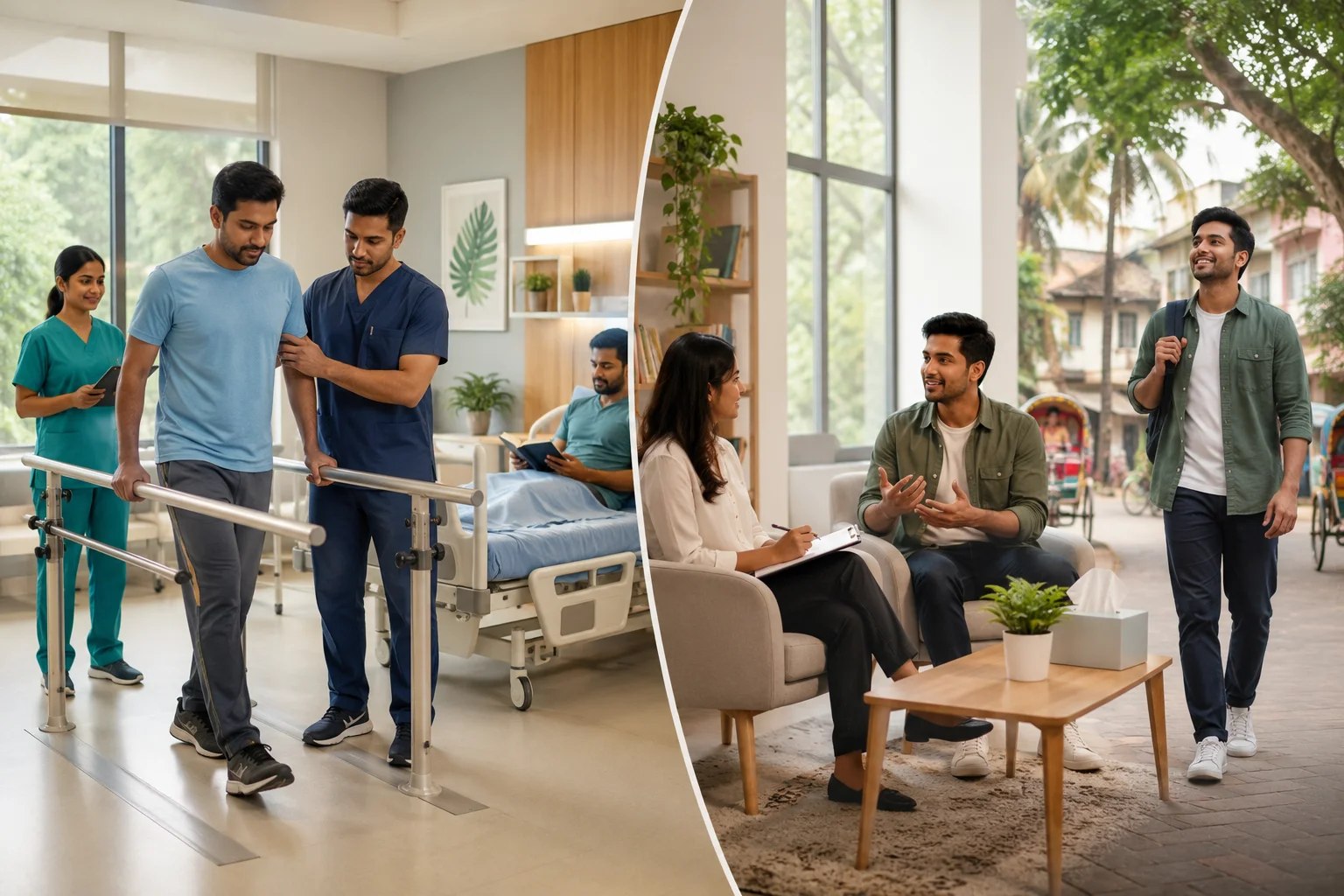
Inpatient rehab in Bangladesh means the patient lives inside a rehab center, hospital, or residential treatment facility for a period of time. This is also called a residential rehab center Bangladesh families often choose when the situation is serious.
A full time rehab center Bangladesh program may last 30, 60, 90 days, or longer. The right length depends on the person’s addiction, mental health, relapse history, withdrawal risk, and progress during treatment.
In inpatient rehab, the patient stays away from drugs, alcohol, toxic friends, dealers, and daily triggers. This gives the person a safer space to recover.
I usually suggest inpatient rehab when the addiction is severe, the patient has relapsed many times, or the family cannot manage the person safely at home.
What Usually Happens in Inpatient Rehab?
A good inpatient rehab program should not be only about keeping someone inside a center. It should include proper treatment, structure, care, and recovery planning.
In inpatient rehab, the patient may receive:
- Medical assessment
- Detox or withdrawal management if needed
- Psychiatrist consultation
- Individual counseling
- Group therapy
- Family counseling
- Daily routine and discipline
- Sleep, food, hygiene, and behavior support
- Relapse prevention education
- Aftercare planning before discharge
The goal is not only to stop drug or alcohol use for a few weeks. The real goal is to help the person understand addiction, manage cravings, rebuild discipline, and prepare for life after rehab.
Who Needs Inpatient Rehab?
Inpatient rehab may be needed when the person has:
- Heavy substance use
- Yaba, alcohol, heroin, phensedyl, cannabis, sedative, or multiple drug use
- Withdrawal symptoms
- Aggression or self-harm risk
- Depression, anxiety, psychosis, or other mental health problems
- Failed home treatment
- Repeated relapse
- No safe family supervision
- Refusal to attend outpatient sessions
- Drug-using friends or dealers nearby
- No control over money, phone, or daily routine
If the family is scared to leave the person alone, outpatient treatment may not be enough.
What Is Outpatient Rehab in Bangladesh?
Outpatient rehab in Bangladesh means the patient lives at home and visits a clinic, hospital, counselor, psychologist, or psychiatrist for scheduled treatment sessions.
Outpatient rehab can include therapy, medicine follow-up, family counseling, relapse prevention, and regular progress checks. It is more flexible than residential care because the patient does not stay overnight.
Outpatient addiction counseling Dhaka services may be helpful for people who are stable, motivated, and supported by family. Day care addiction treatment Dhaka can also be useful when the person needs more structure during the day but does not need 24/7 care.
Outpatient rehab is usually better for mild to moderate addiction, not for dangerous withdrawal or high-risk relapse.
Types of Outpatient Addiction Treatment
Not all outpatient care is the same. Families should understand the different levels before choosing a program.
Standard Outpatient Counseling
This may include weekly or biweekly sessions with a counselor, psychologist, or psychiatrist. It is best for people with mild addiction, early-stage substance use, or stable recovery after inpatient treatment.
Intensive Outpatient Treatment
This means several sessions per week. It gives more structure than normal counseling but still allows the patient to live at home. It may include individual therapy, group sessions, family education, and relapse prevention planning.
Day Care Addiction Treatment
In day care addiction treatment, the patient spends several hours at a treatment center during the day and returns home at night. This may work when the home is safe but the patient needs more daily structure.
Aftercare Outpatient Program
Aftercare happens after inpatient rehab. It helps the patient stay connected to treatment, manage cravings, rebuild family trust, and prevent relapse.
Who Is Outpatient Rehab Best For?
Outpatient rehab may be a good option when the person has:
- Mild to moderate addiction
- No dangerous withdrawal symptoms
- Stable mental health
- Strong family support
- Drug-free home
- Motivation to attend sessions
- Work or study responsibilities
- Ability to avoid old drug-using friends
- A completed inpatient program and need for follow-up care
Outpatient care depends heavily on honesty, family monitoring, and regular attendance. If the person keeps missing sessions or lying about drug use, the treatment plan may need to change.
Inpatient vs Outpatient Rehab: Main Differences
| Factor | Inpatient Rehab | Outpatient Rehab |
| Living arrangement | Patient stays at the center | Patient stays at home |
| Supervision | 24/7 care | Scheduled sessions only |
| Best for | Severe addiction, relapse, unsafe home | Mild/moderate addiction, stable home |
| Detox safety | Better for risky withdrawal | Not suitable for dangerous withdrawal |
| Flexibility | Low | High |
| Cost | Higher | Lower |
| Family involvement | Planned family sessions | Daily family role is stronger |
| Trigger control | High | Low to moderate |
| Relapse risk | Lower during treatment | Higher if home is risky |
| Privacy concern | May require staying away from normal routine | Easier to keep normal routine |
| Aftercare need | Still required | Often used as aftercare |
Both options can help. The main question is not “Which one is better for everyone?” The real question is “Which one is safer for this person right now?”
When Inpatient Rehab Is the Better Choice
Inpatient rehab is better when the person needs safety, structure, and close supervision.
Severe Addiction or Long-Term Drug Use
Severe addiction often needs more than weekly counseling. If the person has been using drugs or alcohol for a long time, has lost control, or cannot stop even after serious family problems, inpatient care may be safer.
In these cases, the person may need a structured daily routine, therapy, medical support, and distance from triggers.
Withdrawal Risk
Some withdrawal symptoms can be dangerous. This is especially true for heavy alcohol use, sedatives, or long-term substance dependence.
Warning signs include:
- Seizures
- Severe shaking
- Hallucinations
- Confusion
- Uncontrolled vomiting
- Severe depression
- Suicidal thoughts
- Heavy alcohol or sedative dependence
If these signs are present, I do not recommend trying to manage the person at home without medical advice. A doctor or psychiatrist should assess the person first.
Repeated Relapse
If the person keeps relapsing after promises, family pressure, short counseling, or home treatment, inpatient rehab may be the better choice.
Repeated relapse does not mean the person is hopeless. It often means the current treatment level is too weak for the problem.
Unsafe Home or Social Environment
Outpatient care is hard when the home or neighborhood is full of triggers.
Examples include:
- Drugs are available nearby
- Friends or dealers keep contacting the patient
- Family conflict is high
- No one can supervise the person
- The patient becomes aggressive at home
- The person has easy access to money and phone contacts
- The family is too tired or afraid to manage the situation
In these cases, inpatient rehab can give the patient a safer environment and give the family time to recover too.
Co-Occurring Mental Health Issues
Many people with addiction also struggle with depression, anxiety, trauma, psychosis, bipolar symptoms, or suicidal thoughts.
When addiction and mental health issues happen together, the treatment plan should include both. Only focusing on the drug problem may not be enough.
When Outpatient Rehab Is the Better Choice
Outpatient rehab can work well when the person is stable and the family can support recovery at home.
Mild to Moderate Addiction
Outpatient rehab may be suitable when the person still has some control, can attend work or study, and has not had dangerous withdrawal symptoms.
This option may also work for people who ask for help early before addiction becomes severe.
Strong Family Support
Outpatient care works better when family members can help monitor:
- Daily routine
- Appointments
- Money use
- Phone use
- Sleep schedule
- Friends and social circle
- Mood changes
- Relapse warning signs
Family support does not mean shouting, blaming, or threatening. It means calm monitoring, clear boundaries, and regular communication with the treatment team.
Stable Home Environment
The home should be drug-free, calm, and supportive. If the patient returns home every day to conflict, drug access, or peer pressure, outpatient rehab may fail.
After Inpatient Rehab
Outpatient rehab can be very useful after residential treatment. This is called step-down care.
A good recovery path may look like this:
Inpatient rehab → outpatient counseling → family follow-up → relapse prevention support
This kind of aftercare helps the patient stay stable after leaving the center.
Budget or Personal Responsibility Issues
Outpatient treatment usually costs less because the patient does not stay overnight. It also allows the person to continue work, study, or family duties.
But lower cost should not be the only reason to choose outpatient care. If the person is high-risk, outpatient treatment may cost less at first but fail later.
Cost Difference in Bangladesh
Inpatient rehab usually costs more because it includes accommodation, food, staff, supervision, therapy, and medical support.
Outpatient rehab usually costs less because the patient does not stay overnight.
In Bangladesh, cost can vary based on:
- City
- Doctor or psychiatrist involvement
- Facility quality
- Treatment length
- Room type
- Medicine needs
- Detox support
- Emergency care
- Family counseling
- Follow-up sessions
I do not suggest choosing the cheapest rehab program without checking safety and quality. Families should ask for a written cost breakdown before admission.
Questions to Ask About Cost
Before choosing a rehab treatment option in Bangladesh, ask:
- Is doctor consultation included?
- Are medicines included?
- Is detox included?
- Are family sessions included?
- Are follow-up sessions included?
- Are there extra emergency charges?
- What happens if treatment needs to be extended?
- Is the admission fee refundable?
- Are there separate charges for psychiatric care?
- Is aftercare included after discharge?
The best rehab program Bangladesh families can choose is not always the most expensive one. It is the one that is safe, ethical, clear, and suitable for the patient’s condition.
Treatment Length: How Long Does Rehab Take?
Many inpatient rehab programs last 30, 60, or 90 days. Some people need longer care, especially if the addiction is severe, relapse has happened many times, or mental health problems are present.
Outpatient rehab may continue for several months. Some people need follow-up support for a year or more.
Recovery does not end after discharge. Addiction recovery needs long-term planning, family support, lifestyle change, and relapse prevention.
Some patients do better when they complete a longer and more structured program. But treatment length should be based on clinical need, not only a fixed package.
Bangladesh-Specific Factors Families Should Consider
Choosing between inpatient and outpatient rehab in Bangladesh is not only a medical decision. It is also a family, social, financial, and cultural decision.
Family Involvement Is Often Central
In Bangladesh, family usually plays a direct role in recovery. Family members often:
- Choose the rehab center
- Pay for treatment
- Monitor the patient
- Handle social pressure
- Manage stigma
- Support aftercare
- Watch for relapse signs
This can be helpful, but it can also create pressure. Families need guidance too. A good rehab program should educate family members, not blame them.
Stigma Can Delay Treatment
Many families hide addiction until the situation becomes severe. They may fear shame, neighbors, relatives, marriage problems, or social judgment.
But waiting too long can make treatment harder. Early help is usually safer than hiding the problem until crisis happens.
City Access Matters
Treatment access can be different depending on where the family lives. Families in Dhaka may find more options, while families in Chattogram, Sylhet, Rajshahi, Khulna, Barishal, Rangpur, and Mymensingh may need to compare availability carefully.
In April 2026, BSS reported that the Ministry of Home Affairs was moving forward with plans to build 200-bed drug rehabilitation centers in seven divisional cities. The project is led by the Department of Narcotics Control and is meant to improve access to addiction treatment services across Bangladesh. BSS also reported that the centers would include medical infrastructure, trained staff, and long-term rehabilitation programs.
Licensed and Qualified Care Matters
Families should check whether a rehab center is properly licensed and whether qualified doctors, psychiatrists, psychologists, counselors, and trained staff are involved.
A good center should also follow ethical treatment. Patients should not be punished, humiliated, abused, or locked away without proper explanation and care.
Before admission, ask the center to explain:
- License status
- Doctor involvement
- Psychiatrist involvement
- Detox safety
- Treatment plan
- Family communication
- Patient rights
- Emergency process
- Aftercare plan
How to Choose the Right Rehab Program in Bangladesh
The best rehab program Bangladesh families can choose is the one that matches the patient’s risk level.
Do not choose only by location, price, room quality, or promises. Choose by safety, treatment quality, and aftercare.
Use This Decision Checklist
Ask these questions before deciding between inpatient vs outpatient rehab:
- How long has the person been using drugs or alcohol?
- What substance is involved?
- Has the person tried to quit before?
- Are there withdrawal symptoms?
- Is there any self-harm or violence risk?
- Does the person have depression, anxiety, or psychosis?
- Is the home drug-free?
- Can the family supervise daily?
- Can the patient attend sessions regularly?
- Is inpatient treatment financially possible?
- Is aftercare available after discharge?
- Is the person willing to follow a treatment plan?
- Are old friends or dealers still contacting the person?
- Is there a safe plan for phone, money, sleep, and daily routine?
If many answers show high risk, inpatient rehab may be safer.
Questions to Ask Before Admission
Before choosing a rehab center, ask:
- Is there a psychiatrist or medical doctor involved?
- Is detox medically supervised?
- What therapies are included?
- Is family counseling included?
- What is the staff-to-patient ratio?
- Is the center licensed?
- What is the relapse prevention plan?
- What happens after discharge?
- Are patients treated respectfully?
- Can family visit or receive progress updates?
- How are emergencies handled?
- Are medicines given only by qualified professionals?
- Are patients allowed to communicate with family?
- What rules are used for discipline?
- Is there a written treatment plan?
A trustworthy center should answer clearly.
Red Flags When Choosing a Rehab Center
Families should be careful if a center has:
- No doctor or psychiatrist involvement
- No written treatment plan
- No clear pricing
- Forced confinement without proper explanation
- Physical punishment or humiliation
- No family updates
- Unrealistic “100% cure” claims
- No relapse prevention plan
- No aftercare
- Unlicensed or unclear legal status
- Poor hygiene or overcrowding
- Staff who cannot explain detox safety
- Pressure to admit immediately without assessment
- No privacy or dignity for patients
- No plan for mental health care
Addiction treatment should be firm, structured, and safe. It should never be abusive.
Can You Start With Outpatient and Move to Inpatient Later?
Yes. Some patients can start with outpatient rehab first.
But if relapse continues, withdrawal becomes risky, mental health gets worse, or the home environment fails, inpatient care may be needed.
Some patients should start with inpatient rehab and then move to outpatient care for aftercare.
The best path is often not one or the other. It may be a step-by-step treatment plan.
For example:
Mild case: Outpatient counseling → family support → relapse prevention
Moderate case: Intensive outpatient/day care → regular follow-up → aftercare
Severe case: Inpatient rehab → outpatient counseling → long-term aftercare
Inpatient vs Outpatient Rehab: Which Is Better for Different Cases?
Different substances and situations need different levels of care.
For Yaba Addiction
Yaba addiction may need structured care if use is heavy, relapse is repeated, sleep is badly affected, or mental health symptoms appear.
If the person becomes paranoid, aggressive, depressed, or unable to control use, inpatient rehab may be safer.
Outpatient care may work for mild cases if the person is honest, motivated, and supported by family.
For Alcohol Addiction
Alcohol withdrawal can be dangerous in some cases. Inpatient rehab may be safer if there is heavy drinking, shaking, seizures, confusion, hallucinations, or repeated failed attempts to stop.
Families should not ignore alcohol withdrawal symptoms. A medical assessment is important.
For Cannabis Addiction
Outpatient rehab may work for mild cannabis addiction, especially if the person is young, stable, and willing to attend counseling.
Inpatient rehab may be needed if cannabis use is severe, daily functioning is poor, family conflict is high, or mental health problems are present.
For Teenagers or Young Adults
For teenagers and young adults, family involvement is very important. The treatment plan should look at school or university, peer influence, phone use, mental health, sleep, and family communication.
I suggest a mental health assessment because many young people use drugs while also struggling with anxiety, depression, trauma, or stress.
For Working Professionals
Outpatient rehab may be realistic for working professionals with mild addiction. It allows them to continue work while receiving treatment.
But work should not become an excuse to avoid serious treatment. If addiction is affecting job performance, money, family life, or safety, inpatient rehab may be needed.
For Repeated Relapse
For repeated relapse, inpatient rehab is usually the safer option. The person may need distance from triggers, stronger supervision, and a full relapse prevention plan.
Relapse means the treatment plan needs review. It does not mean recovery is impossible.
Final Verdict: Which Is Better?
Inpatient rehab is better when addiction is severe, withdrawal is risky, relapse has happened repeatedly, or the home environment is unsafe.
Outpatient rehab is better when the addiction is mild to moderate, the patient is motivated, and the family can provide stable support at home.
In Bangladesh, the safest choice should be made after a professional assessment, not only based on cost or convenience.
At Mayer Ashroy, I believe the right rehab decision should protect the patient’s safety, dignity, mental health, and long-term recovery. A good treatment plan should not stop at admission. It should include assessment, family guidance, relapse prevention, and aftercare.
FAQs About Inpatient vs Outpatient Rehab in Bangladesh
Is inpatient rehab better than outpatient rehab?
Inpatient rehab is better for severe addiction, withdrawal risk, repeated relapse, or unsafe home environments. Outpatient rehab is better for mild to moderate addiction with strong family support.
What is inpatient rehab in Bangladesh?
Inpatient rehab means the patient lives inside a residential rehab center or hospital and receives structured treatment, counseling, supervision, and relapse prevention support.
What is outpatient rehab in Bangladesh?
Outpatient rehab means the patient lives at home and visits a clinic, hospital, counselor, psychologist, or psychiatrist for scheduled treatment sessions.
Who needs residential rehab in Bangladesh?
Residential rehab is usually needed for severe addiction, repeated relapse, dangerous withdrawal symptoms, mental health issues, or when the home environment is not safe for recovery.
Is outpatient rehab safe for drug addiction?
Outpatient rehab can be safe for mild to moderate addiction if the patient is stable, motivated, and supported by family. It may not be safe for severe withdrawal or high relapse risk.
How long does inpatient rehab take?
Many inpatient programs last 30, 60, or 90 days, but the right length depends on addiction severity, mental health, relapse history, and clinical progress.
Can outpatient rehab work after inpatient rehab?
Yes. Outpatient rehab is often used as aftercare after inpatient treatment to prevent relapse and support long-term recovery.
How do I choose the best rehab program in Bangladesh?
Check the center’s license, doctor involvement, detox safety, therapy plan, family counseling, pricing transparency, patient rights, and aftercare support.
Medical Disclaimer
This content is for educational purposes only and does not replace medical advice. If someone has withdrawal symptoms, suicidal thoughts, aggression, seizures, hallucinations, confusion, or severe mental health symptoms, contact a qualified doctor, psychiatrist, hospital, or emergency service immediately.