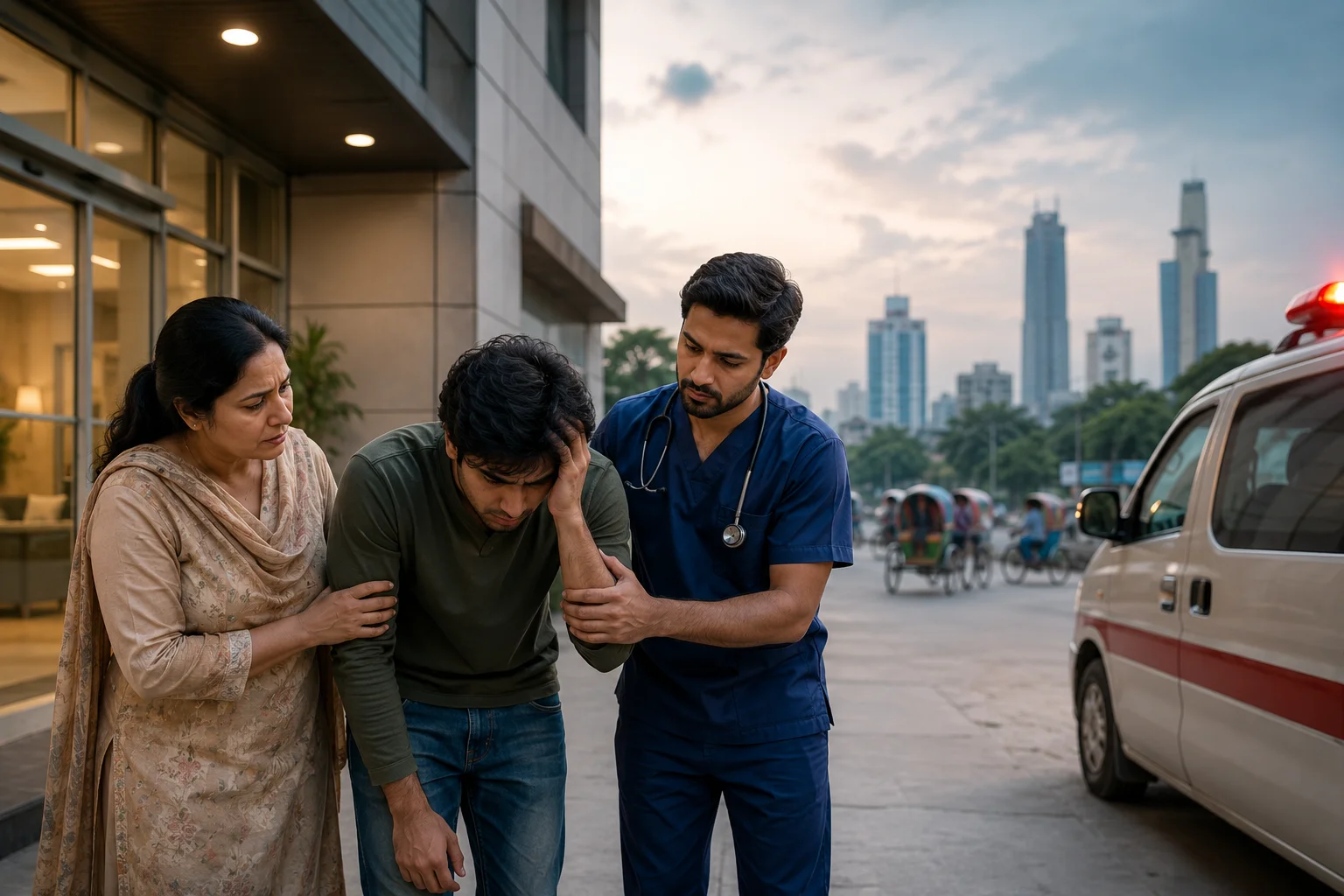
If someone is having a serious drug-related crisis in Dhaka, medical safety comes before rehab admission. If the person is unconscious, cannot be awakened, has trouble breathing, has a seizure, has severe chest pain, collapses, becomes dangerously confused, or may have overdosed, seek emergency medical care immediately.
In Bangladesh, 999 is the national emergency service and operates 24 hours a day.
Once the person is medically stable, the next step may be detoxification support, psychiatric assessment, residential rehabilitation, counselling, or another form of addiction treatment depending on their condition.
At Mayer Ashroy, we believe an urgent admission should start with one question: What type of care does this person need right now?
Important: A rehabilitation centre is not a replacement for a hospital emergency department. Do not delay emergency medical care while trying to arrange routine rehab admission.
When Does Drug Use Become a Medical Emergency?
Not every person who needs addiction treatment needs an emergency department. However, some symptoms should never be treated as a normal rehab admission situation.
Seek urgent medical help if the person:
- is unconscious or very difficult to wake
- has stopped breathing or is struggling to breathe
- has a seizure
- collapses
- has severe chest pain
- becomes extremely confused
- develops severe agitation or paranoia
- experiences hallucinations
- develops a dangerously high body temperature
- has suffered a serious injury while intoxicated
- is behaving in a way that creates an immediate danger to themselves or others
- may have taken a drug overdose
The exact symptoms of an overdose depend on the drug involved. For example, opioid overdose may cause slow or difficult breathing and an inability to wake, while methamphetamine overdose can cause agitation, confusion, hallucinations, irregular heartbeat, fever, seizures, and loss of consciousness.
Severe Withdrawal Can Also Need Medical Care
Families sometimes think stopping drug or alcohol use immediately at home is always safe. That is not true for every substance or every person.
Some withdrawal conditions need medical monitoring. Severe shaking, seizures, hallucinations, severe confusion, extreme agitation, dehydration, or major changes in mental state should be assessed by a healthcare professional.
For example, WHO guidance recognises that severe alcohol withdrawal can involve seizures and delirium and may require medication and clinical management.
We do not recommend trying to manage dangerous withdrawal at home without professional assessment.
Emergency Room, Medical Detox or Rehab: Which One Is Needed?
Families searching for emergency rehab admission in Dhaka often do not know where to take their loved one first.
This simple guide can help:
| Situation | Where to Seek Help First | Main Goal |
| Suspected overdose | Emergency medical service or hospital | Stabilise the person |
| Unconsciousness or breathing difficulty | Emergency medical care | Protect life and breathing |
| Seizure, collapse or severe confusion | Hospital | Urgent medical assessment |
| Severe Yaba-related agitation or psychosis | Emergency medical/psychiatric assessment | Control immediate medical and behavioural risks |
| Severe withdrawal | Medical assessment or supervised detox | Manage withdrawal safely |
| Medically stable but unable to stop using drugs | Addiction treatment or rehab | Begin structured recovery |
| Relapse without an acute medical emergency | Rehab/addiction professional | Reassess treatment and prevent further harm |
A useful way to understand the process is:
Emergency stabilisation → detox or withdrawal management when needed → assessment → rehabilitation → continuing care
These stages are connected, but they are not the same thing.
How Emergency Drug Rehab Admission Usually Works
When a person is medically stable and urgent rehabilitation appears appropriate, families can start the admission process.
1. Call the Treatment Centre First
Before travelling, ask:
- Is a bed available?
- Can admission be arranged today?
- What are the intake hours?
- Does the centre provide detoxification support?
- Is medical or psychiatric assessment available?
- Does the centre treat the substance involved?
- Can the centre manage the expected withdrawal symptoms?
- What happens if the patient becomes medically unstable?
Do not assume that a 24-hour rehab centre in Dhaka automatically provides new admissions 24 hours a day.
A facility may provide round-the-clock residential supervision while maintaining separate intake or assessment hours.
2. Explain the Person’s Current Condition
The treatment team may need to know:
- age
- drug or substances being used
- when the person last used the substance
- approximate amount used, if known
- alcohol or other drugs taken at the same time
- current symptoms
- existing medical conditions
- current medications
- psychiatric history
- previous detox or rehabilitation treatment
- history of seizures or severe withdrawal
- current level of consciousness
- aggressive, suicidal, or dangerous behaviour
Give the most accurate information you can.
Do not delay emergency treatment just to collect all of these details.
3. Decide Whether Hospital Treatment Is Needed First
A responsible rehabilitation centre should recognise when the person’s condition is outside the level of care that the centre can safely provide.
If there are signs of overdose, severe intoxication, major withdrawal complications, serious injury, or another medical emergency, stabilisation at a hospital may need to happen before rehabilitation begins.
4. Confirm the Admission
If rehabilitation is appropriate, confirm:
- bed availability
- admission time
- required documents
- who should accompany the patient
- permitted belongings
- current medications
- payment requirements
- transport arrangements
After arrival, the treatment team can assess the person’s substance-use history, physical health, mental health, withdrawal risk, medications, previous treatment, and immediate recovery needs.
What Happens During the First 24 Hours?
The first day should focus on safety and understanding what the person needs.
Depending on the facility and the patient’s condition, this may include assessment of current symptoms, substance use, withdrawal risk, medication use, physical health, and mental health.
If withdrawal management is needed, the treatment team should decide what level of medical supervision is appropriate rather than expecting the patient or family to manage it alone.
Mental-health assessment can also be important when someone has:
- severe anxiety
- depression
- paranoia
- hallucinations
- extreme aggression
- suicidal behaviour
- another suspected psychiatric condition
Treatment for substance-use disorders can include behavioural therapies, counselling and, for some substance-use disorders, medications. The right treatment depends on the substance and the individual patient’s needs.
At Mayer Ashroy, our website describes residential rehabilitation, detoxification support, individual counselling, family counselling, and personalised treatment planning among our services.
Yaba Emergency Treatment in Dhaka
A Yaba-related crisis deserves special attention because serious stimulant effects can become dangerous quickly.
WHO material from the South-East Asia region identifies Yaba with methamphetamine-type stimulant use.
Possible warning signs of a serious methamphetamine-related reaction include:
- extreme agitation
- panic
- paranoia
- hallucinations
- confusion
- fever or very high body temperature
- fast or irregular heartbeat
- seizures
- aggressive behaviour
- collapse
- loss of consciousness
Methamphetamine overdose can affect several body systems and may require hospital treatment.
Should a Yaba User Go to Hospital or Rehab?
The answer depends on the person’s current condition.
Severe or dangerous symptoms → seek emergency medical care first.
Medically stable but struggling with ongoing Yaba use or dependence → arrange an addiction assessment and appropriate treatment.
Once the immediate crisis has passed, treatment may focus on physical recovery, sleep, mental-health assessment, counselling, behavioural treatment, family support, triggers, relapse prevention, and continuing care.
There is no reason to promise a quick or guaranteed “cure.” Recovery usually requires continued treatment and support.
What Families Should Do During a Drug Crisis
When someone you care about is intoxicated, withdrawing, hallucinating, or behaving unpredictably, it can be difficult to know what to do.
Focus first on safety.
Check whether the person is awake and breathing normally. Do not allow an intoxicated person to drive. If you can do so without putting yourself in danger, reduce access to objects that could cause injury.
When speaking with emergency staff or a treatment centre, tell them what you know about the substances involved.
Useful information includes:
- drug used
- estimated amount
- approximate time of last use
- alcohol or other drugs taken
- prescription medications
- medical conditions
- unusual behaviour
- previous overdose or withdrawal
- previous rehabilitation treatment
If the person is experiencing a serious overdose or dangerous withdrawal, do not try to handle the whole situation at home.
How to Choose an Urgent Drug Rehab Centre
Urgency should not mean choosing a rehabilitation centre without checking whether it can provide the right level of care.
Check Its Regulatory Status
Bangladesh’s Department of Narcotics Control maintains information about government and private drug-treatment facilities. Its current government treatment-centre list includes the Central Treatment Center, Tejgaon, Dhaka.
When considering a private centre, ask about its current registration or approval status and verify information where appropriate.
Ask Who Provides Clinical Care
Look for clear information about the people involved in treatment, such as:
- doctors
- psychiatrists
- nurses
- psychologists
- counsellors
- addiction-treatment professionals
Avoid relying only on terms such as “expert team.” Qualifications should be transparent.
Mayer Ashroy’s current website, for example, publicly lists several medical professionals and their qualifications as part of its treatment team.
Confirm Detox Capability
Ask the centre directly:
- Is detox or withdrawal support medically supervised?
- Which substances can you manage?
- How is the patient monitored?
- What happens if withdrawal becomes severe?
- Where will the patient be transferred if hospital treatment is required?
Not every rehabilitation centre offers the same level of medical detoxification.
Verify What “24 Hours” Actually Means
If you are searching for a 24-hour rehab centre in Dhaka, ask specifically whether the centre provides:
- 24-hour residential supervision
- 24-hour telephone support
- 24-hour clinical care
- 24-hour new admissions
- same-day admission
These are different services.
Check Mental-Health Support
Drug addiction and mental-health problems often occur together.
Ask about assessment and treatment for depression, anxiety, psychosis, hallucinations, paranoia, severe behavioural problems, and other psychiatric conditions.
What to Bring and What Admission May Cost
Before travelling to a treatment centre, ask what documents and belongings are required.
Depending on the facility, useful items may include:
- identification
- current prescriptions
- medications in their original packaging
- medical records
- psychiatric or addiction-treatment reports
- emergency contact information
- permitted clothing and personal items
- payment information
Policies vary, so call the centre first.
How Much Does Emergency Rehab Cost in Dhaka?
There is no single accurate price for every rehabilitation admission.
The total cost can depend on:
- government or private treatment
- residential or outpatient care
- detoxification needs
- length of treatment
- doctor or psychiatrist consultations
- medicines
- laboratory investigations
- room arrangements
- transportation
- additional medical treatment
Ask for a clear explanation of what the quoted price includes before admission.
Drug Crisis and Treatment Resources in Bangladesh
National Emergency Service: 999
For an immediate emergency in Bangladesh, 999 is the national emergency number. The Bangladesh government portal states that the service operates 24 hours a day and calls can be made free of charge.
Department of Narcotics Control Hotline
The Bangladesh national portal currently lists the Department of Narcotics Control hotline as 01908888888.
Because official phone numbers can change, families should use current government information when possible.
Government Treatment Information
The Department of Narcotics Control currently lists the Central Treatment Center in Tejgaon, Dhaka, along with other government treatment centres.
Do not assume that a government or private facility has an available bed or accepts emergency admissions at every hour. Contact the facility directly before travelling unless the situation requires emergency hospital care.
Frequently Asked Questions
Can someone be admitted to drug rehab immediately in Dhaka?
Sometimes, but immediate admission depends on the person’s medical condition, the centre’s admission criteria, intake hours, and bed availability. Call the facility before travelling. If the person is medically unstable, hospital care should come first.
Are there 24-hour rehab centres in Dhaka?
Some residential facilities may operate around the clock, but that does not automatically mean new patients can be admitted 24 hours a day. Always verify the intake hours and current bed availability.
Where should I take someone who has overdosed?
A suspected overdose should be treated as a medical emergency rather than a normal rehab admission. In Bangladesh, call 999 for national emergency assistance or seek emergency hospital care.
What should I do if a Yaba user is hallucinating or extremely aggressive?
Severe hallucinations, confusion, aggression, seizures, collapse, or other dangerous symptoms can require urgent medical or psychiatric assessment. Do not rely only on routine rehab transportation when there is an immediate safety or medical risk.
Does every rehab centre provide detox?
No. Services differ between facilities. Ask whether withdrawal management is available, what medical supervision is provided, and what happens if complications develop.
Can someone move from a hospital to rehab?
Yes, hospital stabilisation followed by addiction treatment can be an appropriate care pathway when the patient is medically stable and the receiving treatment centre considers admission suitable.
What information should I give the rehab centre?
Be ready to explain the substance involved, last use, current symptoms, medical conditions, medications, psychiatric history, and previous addiction treatment.
Can a family arrange rehab for someone who refuses treatment?
A family can contact a treatment centre and ask for professional guidance, but consent and admission requirements depend on the patient’s age, condition, decision-making capacity, immediate safety risks, facility policy, and applicable Bangladesh law. Do not rely on generic online advice for forced or involuntary admission.
Need Urgent Addiction Treatment?
If your loved one is medically stable but urgently needs structured addiction treatment, you can contact our team at Mayer Ashroy to discuss the situation and determine whether our services may be appropriate.
Our current website lists residential rehabilitation, detoxification support, individual counselling, family counselling, and personalised recovery planning. Our centre is located at 2nd Bypass, Railgate, Sabgram, Bogura, so families contacting us from Dhaka should confirm admission arrangements before travelling.
Call Mayer Ashroy: 01711-710046 or 01761-949246.
When you call, be ready to explain what substance the person has been using, when they last used it, their current symptoms, medical conditions, medications, and whether there is any immediate danger.
If the person may have overdosed, cannot breathe normally, cannot be awakened, is having a seizure, has collapsed, or has another life-threatening symptom, seek emergency medical care first rather than waiting for routine rehab admission.