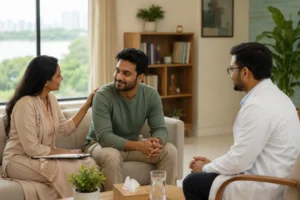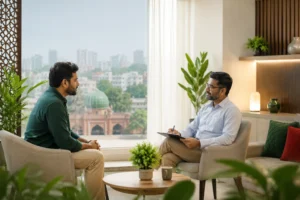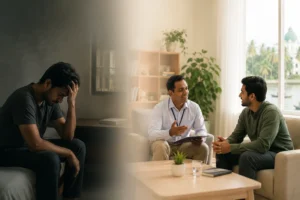
To find a safe drug rehab near you in Bangladesh, do not choose only by distance. First, check whether the center is licensed or verifiable, ask if a doctor or psychiatrist is involved, confirm how detox and emergencies are handled, visit the facility if possible, ask for costs in writing, and make sure there is an aftercare plan before admission.
If you are searching for “drug rehab near me Bangladesh,” “rehab center near me,” “de addiction center near me,” “drug treatment center near me,” or “madok niramoy kendra near me,” you may be worried, confused, or trying to help someone in your family. That is normal. Addiction can affect health, behavior, family life, study, work, and safety.
At Mayer Ashroy, we believe a nearby rehab center can be helpful, but safe care matters more than location. Mayer Ashroy provides drug rehabilitation, detox support, counseling, recovery care, and confidential treatment plans in Bangladesh.
This guide will help you understand how to choose a safe, ethical, and medically supervised drug rehab center in Bangladesh.
How to Find a Safe Drug Rehab Near You in Bangladesh
Use this simple checklist before choosing any rehab center:
- Search by your area, such as “rehab center near me,” “drug treatment center near me,” or “madok niramoy kendra near me.”
- Ask whether the center is licensed or officially listed.
- Ask who assesses the patient before admission.
- Confirm whether detox is medically supervised.
- Ask about doctors, psychiatrists, counselors, nurses, and emergency support.
- Visit the center or request a video tour.
- Ask for the treatment plan, cost, rules, discharge plan, and follow-up support.
Bangladesh’s Department of Narcotics Control has official pages related to treatment-center lists and licensing resources, including pages for government treatment centers and private drug addiction treatment or rehabilitation center licensing.
Why “Near Me” Is Not Enough When Choosing a Rehab Center
The nearest rehab center may not be the safest rehab center.
Addiction treatment can involve withdrawal symptoms, mental health problems, family conflict, relapse risk, and physical health issues. Some people need medical detox. Some need psychiatric care. Some need hospital support before rehab.
A good rehab center should not use punishment, shame, beating, forced isolation, or fear. Safe addiction care should protect dignity, privacy, and patient rights.
Choose based on:
- Safety
- Licensing
- Medical supervision
- Clean facility
- Qualified staff
- Clear cost
- Family communication
- Aftercare support
WHO and UNODC describe drug-use-disorder treatment as evidence-based and ethical care, with proper treatment settings, methods, interventions, and special care for people with different needs.
What Is a Drug Rehab Center?
A drug rehab center helps people reduce or stop harmful substance use. A proper center may provide:
- Assessment
- Detox support
- Counseling
- Psychiatric care
- Group sessions
- Family sessions
- Relapse-prevention planning
- Aftercare support
People in Bangladesh may search for the same service using different terms, such as:
- Rehab center near me
- De addiction center near me
- Drug treatment center near me
- Addiction center near me Dhaka
- Nearest rehab center Bangladesh
- Madok niramoy kendra near me
- Local rehab center Bangladesh
- Drug rehabilitation near me
The name can change, but the main goal should be the same: safe recovery care.
Types of Drug Rehab and Addiction Care Available in Bangladesh
Medical Detox
Detox means managing withdrawal symptoms after a person stops or reduces drug or alcohol use.
Detox can be risky for some people. It should be supervised by qualified medical staff, especially when the person uses alcohol, sedatives, opioids, or multiple substances.
Home detox may be unsafe if the person has:
- Severe dependence
- Seizure history
- Suicidal thoughts
- Hallucinations
- Severe vomiting
- Serious medical problems
- Severe alcohol or sedative withdrawal
Inpatient or Residential Rehab
In inpatient rehab, the person stays at the center. This may help when the person needs structure, distance from triggers, close monitoring, and daily recovery support.
A safe residential rehab should include:
- Medical assessment
- Counseling
- Family communication
- Daily routine
- Safe living space
- Emergency plan
- Discharge and aftercare planning
Outpatient Treatment
In outpatient treatment, the person lives at home and attends scheduled counseling or medical sessions.
This may suit people with mild or moderate problems, stable family support, and low withdrawal risk. A doctor or addiction professional should help decide if outpatient care is enough.
Psychiatric or Dual-Diagnosis Care
Many people with substance use problems also face depression, anxiety, trauma, bipolar disorder, psychosis, sleep problems, or anger issues.
A safe center should screen for mental health problems. NIMH explains that substance use disorders can happen together with other mental disorders, and integrated care may combine mental health treatment, substance-use treatment, therapy, medication, and care management.
Aftercare and Relapse-Prevention Support
Recovery should not stop when the person leaves rehab. Aftercare may include:
- Follow-up counseling
- Family education
- Trigger management
- Recovery group support
- Work or study reintegration
- Emergency relapse plan
Signs Someone May Need Professional Addiction Treatment
These signs do not confirm addiction by themselves. A qualified professional should assess the person.
Someone may need professional help if they:
- Cannot stop or reduce use
- Use more than planned
- Have withdrawal symptoms
- Feel strong cravings
- Miss work, study, or family duties
- Borrow or steal money for substances
- Take risks while intoxicated
- Have family conflict due to substance use
- Show depression, anxiety, aggression, or sleep problems
- Tried to quit before but failed
- Relapsed after short breaks
NIMH explains that substance use disorders can affect the brain and behavior, causing problems in school, work, and relationships, but they are treatable.
How to Search for a Rehab Center Near You in Bangladesh
Search Terms to Use
You can search with terms like:
- Drug rehab near me Bangladesh
- Rehab center near me
- Drug treatment center near me
- Addiction center near me Dhaka
- De addiction center near me
- Madok niramoy kendra near me
- Nearest rehab center Bangladesh
- Local rehab center Bangladesh
Add Your Location
Add your area or city to make the search more useful. For example:
- Drug rehab center in Dhaka
- Rehab center in Uttara
- Rehab center in Mirpur
- Addiction treatment center in Dhanmondi
- Rehab center in Chattogram
- Rehab center in Sylhet
- Rehab center in Rajshahi
- Madok niramoy kendra Dhaka
Do Not Choose From Google Maps Alone
Google reviews can help, but they are not enough. A center may have good reviews but still lack safe medical care, clear rules, or proper supervision.
Before admission, verify the center through license details, staff qualifications, treatment process, cost, emergency support, and facility visit.
How to Check Whether a Rehab Center Is Safe and Legitimate
1. Ask for License or Registration Details
Ask the center:
- Are you licensed to provide addiction treatment or rehabilitation?
- What is your license number?
- Who issued the license?
- Is the license valid now?
- Can I see proof?
Where possible, cross-check with official sources. DNC pages show treatment-center information and private-sector licensing-related resources in Bangladesh.
2. Confirm Medical Supervision
Ask:
- Is there a doctor or psychiatrist involved?
- Who handles withdrawal symptoms?
- Are nurses available?
- What happens during medical emergencies?
- Do you coordinate with a nearby hospital?
A center that cannot explain medical support clearly may not be safe for detox or severe addiction cases.
3. Ask About Assessment Before Admission
A safe center should ask about:
- Substance used
- How long the person has used it
- How often they use it
- Last use
- Previous treatment history
- Withdrawal history
- Medical conditions
- Mental health symptoms
- Suicide or self-harm risk
- Current medications
- Family situation
If a center admits everyone the same way without assessment, be careful.
4. Ask About the Treatment Plan
The treatment plan should explain:
- Detox, if needed
- Counseling schedule
- Family sessions
- Psychiatric care
- Daily routine
- Rules and restrictions
- Expected length of stay
- Discharge criteria
- Aftercare plan
5. Ask About Dignity, Safety, and Patient Rights
Avoid any center that uses:
- Beating
- Chaining
- Forced isolation as punishment
- Verbal abuse
- Humiliation
- Unclear confinement rules
- No family contact without reason
Addiction treatment should be firm and structured, but it should never be abusive.
6. Ask for Transparent Pricing
Ask for a written cost breakdown:
- Admission cost
- Monthly cost
- Doctor fees
- Medicine cost
- Lab test cost
- Emergency cost
- Refund policy
- Extra charges
Do not rely only on verbal promises.
7. Visit Before Admission If Possible
Check:
- Clean rooms
- Safe sleeping space
- Washrooms
- Food quality
- Staff behavior
- Patient-staff ratio
- Emergency access
- Privacy
- Family meeting area
A facility visit can reveal things that a phone call cannot.
Questions to Ask Before Admitting Someone to a Rehab Center
Licensing and Safety
- Are you licensed to provide addiction treatment or rehabilitation?
- Can I see the license information?
- Who supervises the center?
- Is there 24/7 staff on-site?
Medical Care
- Is a doctor or psychiatrist available?
- How do you manage withdrawal?
- What happens if the patient has seizures, severe vomiting, hallucinations, or suicidal thoughts?
- Which hospital do you use for emergencies?
Treatment
- Do you create an individual treatment plan?
- How often does the patient see a counselor?
- Are family sessions included?
- Do you treat mental health conditions too?
- Do you use evidence-based counseling methods?
Family and Communication
- When can family visit?
- How often can family receive updates?
- Who gives progress reports?
- What should family members do during treatment?
Cost and Discharge
- What is included in the monthly fee?
- What is not included?
- How long is the usual stay?
- What happens after discharge?
- Do you offer follow-up support?
Red Flags: When to Avoid a Rehab Center
Avoid or investigate further if a center:
- Refuses to show license or registration information
- Promises a guaranteed cure
- Says every patient needs the same program
- Has no doctor, psychiatrist, or medical referral system
- Uses punishment, fear, or physical force
- Blocks all family communication without clear reason
- Gives vague pricing
- Does not assess mental health
- Offers detox without medical supervision
- Has poor hygiene or overcrowding
- Cannot explain aftercare
- Pressures immediate admission without proper assessment
No rehab center should promise a “100% cure.” Recovery is possible, but it takes time, support, and follow-up care.
What Safe Addiction Treatment Should Include
Medical Assessment
Before treatment starts, the person should receive a physical and mental health assessment. This helps the care team understand risk, withdrawal needs, mental health symptoms, and treatment goals.
Withdrawal Management
Withdrawal should be handled safely. Some symptoms are mild, but some can become dangerous. Medical staff should know when to treat inside the center and when to refer to a hospital.
Counseling and Behavior Support
Safe rehab should include counseling and behavior support. This may include:
- Cognitive behavioral therapy
- Motivational interviewing
- Relapse-prevention counseling
- Group support
- Family counseling
NIMH identifies behavioral therapies such as cognitive behavioral therapy, contingency management, and motivational interviewing as helpful for people with co-occurring substance use and mental disorders.
Medication When Clinically Needed
Some people may need medication for withdrawal, cravings, sleep, anxiety, depression, psychosis, or other health needs.
Medication should only be prescribed by qualified clinicians.
Family Involvement
Family members should learn:
- What addiction is
- How to support recovery
- What not to do
- How to handle relapse risk
- How to set boundaries
- How to rebuild trust slowly
Aftercare
Aftercare helps reduce relapse risk after discharge. It may include counseling, family sessions, medication follow-up, peer support, and a relapse-response plan.
Drug Rehab Near Me in Dhaka: What to Consider
Dhaka has many private rehab and mental health facilities, but quality can vary.
Do not choose only by “best rehab center in Dhaka” claims. Check:
- License or official listing
- Doctor or psychiatrist involvement
- Emergency support
- Privacy
- Cost
- Cleanliness
- Staff behavior
- Family communication
- Aftercare
People often search from areas like Uttara, Mirpur, Dhanmondi, Banani, Gulshan, Mohammadpur, Badda, Jatrabari, and Old Dhaka.
Travel time matters because family visits and follow-up sessions may be needed. But safety should come first.
Finding a Rehab Center Outside Dhaka
If you are outside Dhaka, search with your district or city name. For example:
- Rehab center in Chattogram
- Rehab center in Sylhet
- Rehab center in Rajshahi
- Rehab center in Khulna
- Rehab center in Barishal
- Rehab center in Rangpur
- Rehab center in Mymensingh
- Rehab center in Cumilla
- Rehab center in Gazipur
- Rehab center in Narayanganj
You can also ask local hospitals, psychiatrists, mental health professionals, or DNC-related local offices for guidance.
If the person may need complex detox, psychiatric care, or emergency support, ask whether the local center can handle it. If not, you may need a center with stronger medical referral support.
Cost of Drug Rehab in Bangladesh
Drug rehab cost in Bangladesh can vary. Do not trust a center that gives vague pricing or hides extra charges.
Cost may depend on:
- Location
- Residential or outpatient care
- Length of stay
- Doctor or psychiatrist involvement
- Medicine
- Lab tests
- Room type
- Food
- Emergency care
- Counseling frequency
- Aftercare
Before admission, ask for a written breakdown of:
- Admission fee
- Monthly fee
- Medicine
- Doctor visit
- Tests
- Emergency care
- Family session
- Follow-up session
- Refund or early discharge policy
The cheapest rehab center is not always the safest. The most expensive one is not always the best either. Choose based on safety, care quality, and transparency.
What Families Should Do Before Admission
Before admitting someone, family members should:
- Stay calm and avoid threats
- Avoid physical force unless there is immediate danger and proper legal or medical support
- Gather information about substance use
- Note the last time the person used drugs or alcohol
- Write down medical history
- Write down mental health symptoms
- Keep a list of current medications
- Speak with a doctor or psychiatrist if possible
- Visit the facility
- Keep copies of admission papers and payment receipts
- Ask who will update the family and how often
Family support is important, but family members should not try to manage dangerous withdrawal alone.
Emergency Situations: When Rehab Search Should Wait
Sometimes the person needs urgent medical help before rehab.
Go to the nearest hospital or contact emergency services immediately if the person has:
- Unconsciousness
- Breathing difficulty
- Seizure
- Chest pain
- Severe confusion
- Hallucinations
- Severe vomiting
- Self-harm risk
- Violent behavior
- Suspected overdose
- Severe alcohol or sedative withdrawal
In Bangladesh, 999 is the national emergency helpline for police, fire service, and ambulance support.
A rehab search can happen after the person is medically stable.
Rehab Center vs Home Treatment: Which Is Better?
Home Support May Help When
Home support may be enough when:
- The problem is mild
- There is no dangerous withdrawal risk
- The person is motivated
- Family support is stable
- A doctor or counselor is involved
Rehab May Be Safer When
Rehab may be safer when:
- The person cannot stop
- Withdrawal is severe
- There is repeated relapse
- The home environment has triggers
- There are mental health symptoms
- There is self-harm risk
- There is aggression or overdose risk
- Family cannot provide safe supervision
A professional assessment can help decide the safest option.
How Long Does Drug Rehab Take?
There is no single timeline for everyone.
Detox may take days, but recovery takes longer. Residential programs may last weeks or months. Follow-up care should continue after discharge.
Be careful with claims like “21 days will cure addiction.” Recovery is a process. Longer support often matters more than a short stay.
What Happens After Rehab?
After rehab, the person may need:
- Follow-up counseling
- Psychiatrist review if needed
- Medication follow-up if prescribed
- Family sessions
- Relapse-prevention plan
- Work or study routine
- Avoiding old drug networks
- Peer support
- Emergency relapse plan
A strong aftercare plan helps the person return to daily life with better support.
Final Checklist: Choose a Rehab Center Only If These Are Clear
Choose a rehab center only if these points are clear:
- Licensed or verifiable
- Qualified doctor or psychiatrist involvement
- Safe detox plan
- Clear admission assessment
- Clean and safe facility
- No abuse or punishment-based treatment
- Transparent cost
- Family communication policy
- Mental health support
- Emergency referral process
- Written treatment and discharge plan
- Aftercare support
If the center cannot explain these clearly, keep searching.
Why Families Contact Mayer Ashroy
Families often contact Mayer Ashroy when they need private, respectful, and structured support for addiction recovery in Bangladesh. We focus on safe care, confidentiality, counseling, family support, and recovery planning.
If your family is searching for a drug rehab near you in Bangladesh, we encourage you to ask questions first. A good center should welcome questions because safe treatment starts with trust.
FAQs
What is the best drug rehab near me in Bangladesh?
The best option is not always the nearest one. Choose a licensed or verifiable center with medical supervision, qualified staff, safe detox support, transparent costs, family communication, and aftercare.
How do I find a licensed rehab center in Bangladesh?
Ask the center for license details, including license number, issuing authority, and validity. Cross-check with official sources where possible. Bangladesh DNC has official treatment-center and licensing-related resources.
What should I ask a rehab center before admission?
Ask about license, doctor or psychiatrist involvement, detox, emergency support, staff, treatment plan, family visits, cost, discharge plan, and aftercare.
Is detox at home safe?
Not always. Withdrawal can be dangerous for some substances and situations. Medical advice is important before attempting detox, especially for alcohol, sedatives, opioids, seizures, severe dependence, or mental health risk.
How much does drug rehab cost in Bangladesh?
Cost varies by location, residential or outpatient care, length of stay, medical support, medicines, room type, tests, and aftercare. Ask for a written cost breakdown before admission.
Can a rehab center treat mental health problems too?
Some centers provide psychiatric or dual-diagnosis care. Ask whether a psychiatrist, psychologist, or qualified mental health professional assesses the patient.
What is “madok niramoy kendra”?
“Madok niramoy kendra” is a Bangla term many people use for a drug addiction treatment or rehabilitation center.
Should I choose a rehab center in Dhaka or near my home?
Choose based on safety and care quality first. Dhaka may have more options, but a nearby verified center can be suitable if it provides safe medical care, counseling, family communication, and aftercare.
How long should someone stay in rehab?
It depends on the person’s condition, substance use history, withdrawal risk, mental health, family support, and recovery progress. There is no single timeline for everyone.
What are signs of a bad rehab center?
Warning signs include no license proof, no doctor, unclear costs, abuse, guaranteed cure claims, forced isolation, no family updates, poor hygiene, and no aftercare plan.
References to Add
- Bangladesh Department of Narcotics Control treatment-center and licensing-related resources.
- WHO and UNODC, International Standards for the Treatment of Drug Use Disorders.
- National Institute of Mental Health, co-occurring substance use and mental disorders.
- Mayer Ashroy official website information.
- Bangladesh emergency helpline information.