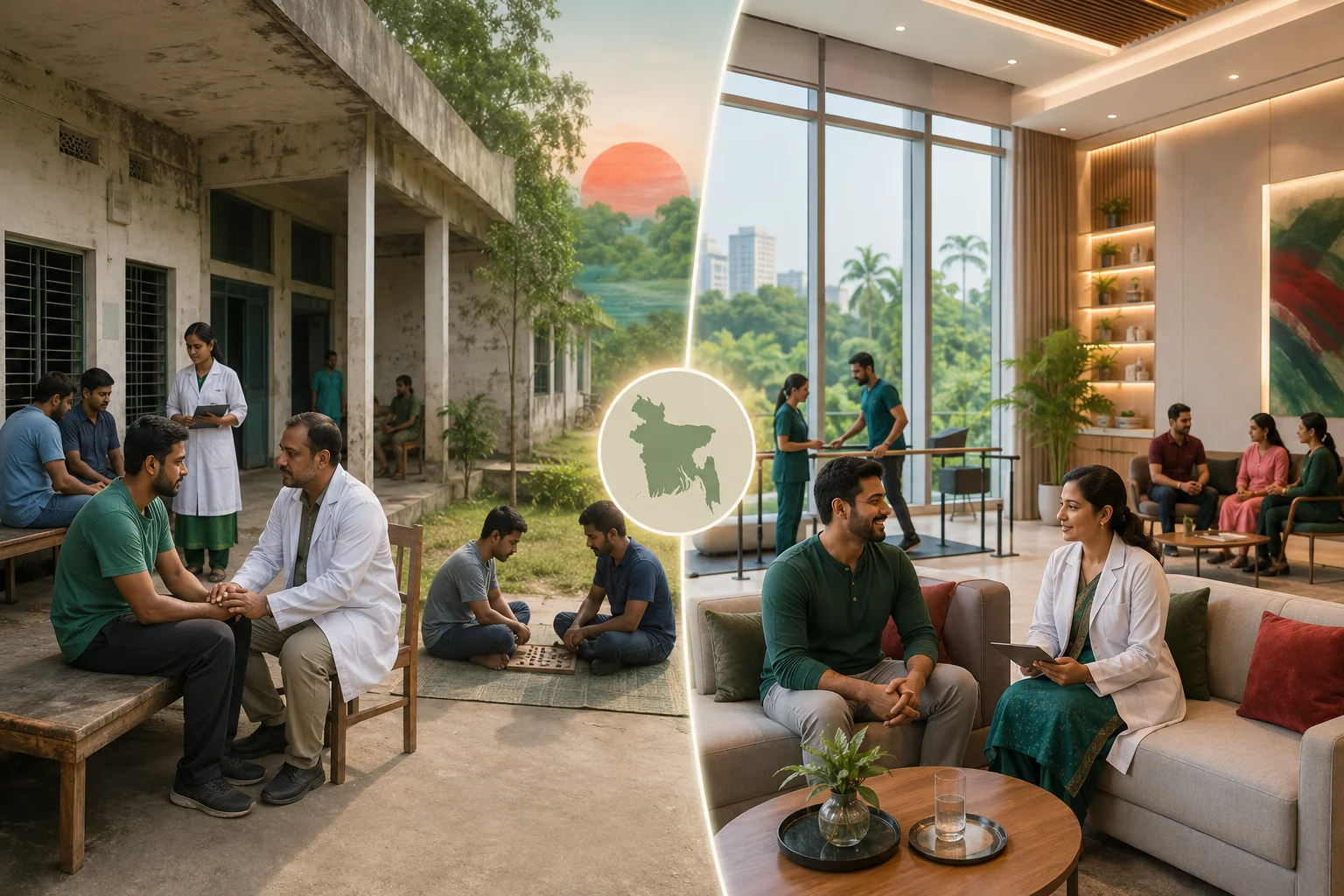
Government rehab may be more suitable when a family’s main concern is affordability. A private rehab center may be more suitable when the patient needs faster admission, greater privacy, more room options, or a more personalized treatment plan.
However, we do not believe that government or private ownership alone can tell you whether a center is safe. The quality of the doctors, nurses, counsellors, treatment program, emergency support, patient protection, and aftercare matters more.
The right choice depends on:
- The substance the person has been using
- The risk of severe withdrawal
- Physical and mental-health conditions
- Previous treatment and relapse history
- Budget
- Bed availability
- Location
- Need for privacy
- Required level of medical supervision
The Department of Narcotics Control, or DNC, publishes information about government treatment centers, private treatment-center listings, licensing applications, inspection forms, and licensing-document requirements. Families should check current official information before making an admission decision.
Emergency warning: A routine rehab admission is not the first step during an overdose, seizure, loss of consciousness, breathing difficulty, chest pain, severe confusion, hallucinations, violent behaviour, or suicidal crisis. Take the patient to an emergency medical service or hospital immediately. People at risk of severe alcohol withdrawal or those with serious physical or psychiatric conditions may need inpatient medical care.
Government vs Private Rehab Centers in Bangladesh: Quick Comparison
| Comparison factor | Government rehab center | Private rehab center |
| Treatment cost | Usually lower or subsidized | Usually higher and package-based |
| Admission | May depend on eligibility, procedures, and bed availability | May be faster when a suitable bed is available |
| Locations | Fewer treatment locations | More options, especially in and around major cities |
| Medical assessment | Depends on the facility and available team | Varies widely and must be verified |
| Detox supervision | Must be confirmed before admission | Some centers offer it, but medical capacity must be checked |
| Psychiatric support | May be onsite or referral-based | Often advertised, but availability and credentials must be verified |
| Individual treatment plan | May be affected by patient numbers and resources | More commonly promoted as part of the package |
| Accommodation | Usually basic or shared | Shared, private, AC, and premium rooms may be available |
| Privacy | Standard institutional confidentiality procedures | Often promoted as a major benefit |
| Family involvement | Availability may vary | Frequently included by established centers |
| Aftercare | Must be confirmed | Often advertised, but duration and services vary |
| Cost details | Ask about fees, tests, medicine, food, and other expenses | Request a complete written package breakdown |
| May suit | Budget-sensitive families who can access suitable care | Patients needing faster access, privacy, or more service options |
These are general differences. Every center operates differently.
A private room does not prove that a center provides good medical treatment. In the same way, lower-cost treatment does not automatically mean poor clinical care. Families must verify the actual program, staff, safety procedures, and patient protections.
WHO and UNODC recommend effective, evidence-based, ethical treatment that addresses both medical and psychosocial needs. Their standards also include special care needs, different treatment settings, and continuing support.
What Is a Government Rehab Center in Bangladesh?
A government rehab center is operated or managed through a public authority. It is different from a privately owned clinic, company, NGO, society, charitable organization, or private hospital.
The DNC publishes an official treatment-center page with information about government facilities and access to a private-center list. Because addresses, admission arrangements, bed status, and services can change, we recommend confirming current details directly before travelling.
Services a government center may provide
Depending on the facility, a government rehab center in Bangladesh may provide:
- Initial patient screening
- Medical assessment
- Withdrawal management
- Psychiatric evaluation
- Prescribed medication
- Residential treatment
- Individual or group counselling
- Behavioural rehabilitation
- Family guidance
- Hospital referral
- Discharge planning
Do not assume that every government center provides all these services. Ask what is currently available, who provides it, and how often the patient will receive it.
Advantages of government rehab
Lower expected treatment cost
Government treatment is generally considered by families looking for more affordable care. Services may be subsidized or offered at a lower cost than many private residential packages.
However, low-cost government rehab in Bangladesh does not always mean completely free treatment. Families should ask about:
- Admission fees
- Diagnostic tests
- Medicines
- Food
- Accommodation
- Transportation
- Emergency hospital expenses
- Post-discharge medication
We do not recommend publishing or relying on one universal government rehab price. The total cost may depend on the facility, services, treatment duration, and patient’s medical needs.
Public-sector monitoring
The DNC’s Treatment and Rehabilitation Wing has responsibilities connected to treatment, rehabilitation, coordination, and monitoring of relevant treatment activities. Even with public-sector oversight, families should still ask about the current medical team, bed capacity, detox arrangements, emergency process, treatment duration, and complaint procedure.
A practical option for limited budgets
A government center may be worth investigating first when:
- The family cannot afford several months of private residential treatment
- A suitable government bed is available
- The patient’s medical needs match the facility’s services
- The family can complete the required admission procedure
- Premium accommodation is not necessary
Possible limitations
Possible limitations may include:
- Limited locations
- Bed shortages
- Longer admission procedures
- Shared rooms
- Less choice over accommodation
- Higher patient pressure on available staff
- Fixed schedules
- Institutional visitor and communication policies
- Limited access to some specialist services
These limitations do not apply to every government center. Families should verify the current situation instead of relying on general assumptions.
Who may be suitable for government rehab?
A government option may suit a person who:
- Needs affordable treatment
- Can safely complete the admission process
- Has medical needs the center can manage
- Lives near an available facility
- Does not require a private room or highly customized amenities
Who needs a medical assessment before choosing rehab?
A normal residential admission decision may not be suitable for:
- A person at risk of severe withdrawal
- Someone with seizures
- A person who is unconscious or severely confused
- Someone with breathing problems or chest pain
- A person with suicidal thoughts
- Someone experiencing psychosis or extreme aggression
- A pregnant patient
- An adolescent
- A person with serious neurological or physical illness
- Someone who has used several substances or an unknown street drug
The safest next step in these cases is an urgent medical assessment. The patient may need hospital-level care before residential rehabilitation.
What Is a Private Rehab Center in Bangladesh?
A private rehab center may be operated by:
- A private company
- A clinic or hospital
- A registered society
- An NGO
- A charitable organization
- A specialist addiction-treatment provider
The word “private” does not automatically mean that a center is licensed, medically supervised, or able to provide hospital-level care.
Many private centers advertise medical detox, psychiatric consultation, individual counselling, family therapy, mental-health treatment, personalized plans, privacy, aftercare, and different accommodation packages. The actual availability and quality of these services must be checked directly.
Advantages of private rehab
Faster communication and admission
A private rehab center may provide:
- Direct telephone consultation
- Faster bed confirmation
- Scheduled or same-day admission
- Transportation support
- Flexible intake arrangements
- Pre-admission family guidance
A responsible center should still assess whether it can safely manage the patient. Fast admission has little value when the facility cannot manage withdrawal, medical complications, or a psychiatric crisis.
More accommodation choices
A private drug rehab in Bangladesh may offer:
- Shared non-AC rooms
- Shared AC rooms
- Private rooms
- Attached bathrooms
- Premium accommodation
- Different meal or personal-care options
Room quality is important for comfort, but it should not replace clinical quality. A clean private room cannot make up for an absent doctor, unsafe detox, unqualified staff, or a weak treatment plan.
More personalized support
Some private centers may provide:
- Individual treatment planning
- More frequent counselling
- Family sessions
- Dedicated case coordination
- Psychiatric follow-up
- Treatment for co-occurring mental-health conditions
- Personal discharge planning
- Relapse-prevention planning
A daily routine is not automatically an individualized treatment plan. The plan should reflect the person’s substance-use history, health, risks, family situation, goals, and previous relapses.
Privacy and confidentiality
Privacy may be especially important for:
- Professionals
- Business owners
- Students
- Public figures
- Women
- Families concerned about stigma
Ask the center:
- Who can access patient records?
- How are updates shared with relatives?
- Can staff take patient photographs?
- Can photographs or stories be posted online?
- Are consultations conducted privately?
- How are visitors’ identities protected?
Confidentiality is a healthcare responsibility. Luxury accommodation is an optional service. They are not the same thing.
Possible disadvantages
Possible concerns with private addiction treatment in Bangladesh include:
- Higher total cost
- Large differences between packages
- Extra charges for doctors, medicine, tests, or emergency care
- Uneven staff qualifications
- Visiting doctors presented as full-time doctors
- Unverified success-rate claims
- Attractive rooms hiding weak clinical care
- Use of unqualified counsellors
- Poor night-time medical coverage
- Inadequate emergency arrangements
- Expired, unclear, or mismatched licenses
- Restrictive, humiliating, or abusive practices
Families should never accept claims such as “100% recovery,” “permanent cure,” or “guaranteed results.”
Government vs Private Rehab Bangladesh: Detailed Differences
1. Treatment cost
Government care is generally expected to cost less, but additional expenses may still apply.
Private rehab is normally priced by month, treatment period, room type, or service package. The quote may or may not include medical detox, doctor visits, psychiatric consultation, medicine, laboratory tests, food, family sessions, and aftercare.
Before paying, ask for a written estimate showing:
- Expected treatment duration
- Monthly or full-program cost
- Admission fee
- Refundable and non-refundable payments
- Doctor and psychiatrist fees
- Included tests
- Included medicines
- Detox charges
- Room category
- Emergency hospital costs
- Transportation
- Personal expenses
- Early-discharge policy
- Readmission charges
- Aftercare costs
Do not use one provider’s price as a national average.
2. Admission and waiting time
A government admission may involve:
- Contacting the facility
- Confirming current services
- Checking bed availability
- Preparing identity and medical documents
- Attending an initial screening
- Meeting eligibility requirements
- Receiving an admission date
A private admission may involve:
- A telephone consultation
- Review of the patient’s history
- Bed confirmation
- Payment or deposit
- Medical screening
- Guardian documentation
- Transport arrangements
- Review of personal-item rules
The fastest center is not always the safest center. First confirm whether it can manage the patient’s medical and psychiatric risks.
3. Medical detox and withdrawal safety
Detoxification, residential rehabilitation, counselling, psychiatric treatment, and emergency hospitalization are different services.
A center using the word “detox” should be able to explain:
- Who performs the medical assessment
- Whether a registered physician is involved
- Whether nurses or trained medical staff are available
- How vital signs are monitored
- How withdrawal severity is assessed
- How medicines are prescribed and recorded
- What emergency equipment is available
- Which hospital receives emergency referrals
- Whether transport is immediately available
- What happens during a seizure or loss of consciousness
Alcohol and sedative withdrawal can require special caution. WHO recommends inpatient management for people at risk of severe alcohol withdrawal, those with serious physical or psychiatric conditions, or those without adequate support. Benzodiazepine withdrawal should be planned and medically managed rather than stopped suddenly.
We do not recommend attempting home detox based on information from a website.
4. Doctors, psychiatrists, psychologists, and counsellors
Do not accept the phrase “expert team” as proof.
Ask for:
- Full name
- Qualification
- Professional role
- Registration number where applicable
- Full-time or visiting status
- Days and hours onsite
- Frequency of patient consultations
- Night-shift coverage
- Experience in addiction treatment
Also ask whether a nurse, doctor, or trained medical worker is present at night. A doctor who visits once a week is not the same as continuous medical coverage.
5. Treatment program and personalization
A complete assessment may review:
- Substances used
- Frequency and amount
- Last use
- Previous withdrawal
- Overdose history
- Previous rehab treatment
- Relapse history
- Physical health
- Current medicines
- Mental-health symptoms
- Suicide or self-harm risk
- Violence risk
- Family and home situation
- Education or employment
- Personal recovery goals
Treatment may then include individual counselling, group work, family sessions, prescribed medication, life-skills support, relapse prevention, and social reintegration.
WHO and UNODC describe drug-use disorders as health conditions that should be addressed through ethical and evidence-based medical and psychosocial care.
6. Mental health and dual diagnosis
Substance-use problems may occur with:
- Depression
- Anxiety
- Trauma
- Bipolar disorder
- Psychosis
- Sleep disorders
- Suicidal thoughts
- Other substance-use disorders
The severity of both the addiction and mental-health condition affects the required level of care. Treating both conditions is important when they occur together.
Ask whether the center provides:
- Onsite psychiatric care
- Visiting psychiatric care
- Psychological therapy
- Medication monitoring
- Crisis management
- Hospital referral
- Follow-up after discharge
A center should clearly explain how often the psychiatrist meets each patient. “Psychiatric support available” is too vague.
7. Rooms, privacy, and living conditions
Inspect:
- Bedrooms
- Bathrooms
- Ventilation
- Drinking water
- Food preparation
- Cleanliness
- Personal storage
- Safe exits
- Fire-safety arrangements
- Outdoor access
- Exercise facilities
- Visitor areas
- Medication storage
- Privacy during consultations
- Night-time staffing
Ask where CCTV cameras are installed. Cameras may support security in shared areas, but they should not remove reasonable privacy in bathrooms, changing areas, bedrooms, or medical consultations.
8. Family involvement
A good family program may include:
- Family assessment
- Guardian orientation
- Scheduled updates
- Family counselling
- Education about addiction
- Relapse-warning education
- Crisis contact procedures
- Discharge meetings
- Home-environment planning
Family involvement should support treatment without removing the patient’s dignity or confidentiality.
Ask who provides family counselling, how frequently it happens, and whether it is included in the package.
9. Treatment duration
Detox is not the same as complete rehabilitation.
Treatment length may depend on:
- Substance used
- Withdrawal risk
- Physical health
- Mental-health symptoms
- Previous relapse
- Progress during treatment
- Home environment
- Aftercare arrangements
Longer treatment is not automatically better. A longer stay without a clear clinical plan may add cost without improving care. The center should explain why it recommends a certain period and what goals will be reviewed.
Ask:
- Can treatment duration change?
- Who makes that decision?
- What happens if the patient wants to leave early?
- Can the program be extended?
- What will an extension cost?
- What are the discharge criteria?
10. Aftercare and relapse support
Treatment should not end at the front gate.
Aftercare may include:
- Follow-up appointments
- Telephone check-ins
- Outpatient counselling
- Family sessions
- Peer-support meetings
- Medication review
- Relapse-warning monitoring
- Crisis planning
- Drug testing when clinically appropriate
- Education or employment support
- Readmission planning
WHO and UNODC standards describe treatment as a broader system involving different settings, interventions, rehabilitation, and continuing support rather than one short residential event.
Ask one direct question:
Does the package end when the patient leaves the building, or is continuing care included?
11. Women, adolescents, and other special groups
Women
Ask about:
- Female-only accommodation
- Female staff
- Protection from harassment
- Pregnancy assessment
- Trauma-informed care
- Private consultation
- Family and childcare responsibilities
Adolescents
Ask about:
- Minimum admission age
- Guardian consent
- Child or adolescent psychiatric support
- Education continuation
- Separation from adult patients
- Safeguarding policy
- Family involvement
An adult residential program may not be safe or suitable for an adolescent.
Patients with disabilities or chronic illness
Ask whether the facility can manage:
- Physical accessibility needs
- Diabetes
- Epilepsy
- Heart disease
- Liver disease
- Infectious illness
- Regular prescribed medicines
- Safe medicine storage
- Emergency hospital referral
WHO and UNODC treatment standards include special consideration for populations with additional treatment and care needs.
12. Location and family access
When choosing a government rehab center in Bangladesh, consider:
- Travel distance
- Public transportation
- Admission-day travel
- Access to medical referral
- Family visiting requirements
- Post-discharge follow-up
When looking for a govt drug treatment center in Dhaka, use current DNC information and contact the facility before travelling. Do not assume that every government service is offered in one location.
When choosing a private rehab center in Dhaka or another city, check:
- Distance from the family
- Nearby hospitals
- Emergency transport
- Visitor restrictions
- Road access
- Transport support
- Whether the environment is secure and suitable for recovery
A center close to home can make family involvement and aftercare easier. However, the nearest center should not be chosen when it cannot provide the required level of care.
Which Option Should You Investigate First?
| Situation | Option to investigate first | Why |
| Very limited budget | Government or subsidized nonprofit service | Financial burden may be lower |
| Immediate suitable bed required | Verified private center | Admission may be faster |
| Severe withdrawal or medical instability | Hospital-level medical service | Emergency capacity matters more than ownership |
| Serious psychiatric symptoms | Facility with active psychiatric care | Both conditions need attention |
| High privacy requirement | Private center with a written confidentiality policy | More privacy options may be available |
| Private room required | Private center | More accommodation choices |
| Family wants regular counselling | Center with a documented family program | Frequency and provider can be checked |
| Female patient | Gender-appropriate licensed facility | Safety and specialized arrangements matter |
| Adolescent patient | Age-appropriate specialist service | Adult rehab may be unsuitable |
| Previous relapse after rehab | Center with strong aftercare | Continuing support is important |
| Family lives outside Dhaka | Nearest safe and verified service | Travel can affect follow-up and continuity |
This table only helps families decide what to investigate first. It is not a diagnosis or an endorsement of a particular center.
How to Verify a Rehab Center in Bangladesh
The DNC publishes licensing applications, document checklists, inspection forms, treatment-center information, and licensing-related services. A Facebook page, business page, or trade license alone should not be treated as proof that a center has current authorization to provide addiction treatment.
Step 1: Ask for the current DNC license
Request:
- Legal name of the center
- License number
- Issuing authority
- Issue date
- Renewal or expiry date
- Licensed address
- Approved treatment category
- Approved bed capacity
Step 2: Cross-check the information
Confirm that:
- The legal name matches the operating name
- The address matches the facility
- The license is current
- The center appears in relevant official records
- The licensed services match what is being advertised
Step 3: Verify the healthcare team
Check:
- Doctor registration
- Psychiatrist qualifications
- Psychologist qualifications
- Nurse availability
- Counsellor training
- Onsite schedule
- Night-time coverage
Step 4: Visit the facility
Look for:
- Clean rooms and bathrooms
- Safe exits
- Fire-safety measures
- Secure medicine storage
- Patient privacy
- No overcrowding
- Adequate night staff
- Safe food and water
- Emergency transport arrangements
Step 5: Review the treatment plan
Ask for a clear explanation of:
- Assessment
- Detox procedures
- Medical supervision
- Counselling schedule
- Psychiatric reviews
- Family program
- Progress measurement
- Discharge criteria
- Aftercare
Step 6: Get all costs in writing
The document should include:
- Package duration
- Included services
- Excluded services
- Medicines
- Tests
- Emergency expenses
- Transport
- Cancellation terms
- Early-discharge policy
- Readmission charges
Step 7: Understand patient rights
Ask about:
- Consent
- Confidentiality
- Family communication
- Complaints
- Personal searches
- Medication consent
- Restraint or isolation
- Voluntary discharge
- Protection from physical punishment
- Protection from humiliation or harassment
Evidence-based treatment should be ethical and protect the patient’s dignity and rights.
Red Flags When Choosing a Rehab Center
Be cautious when a center:
- Cannot show a current license
- Has a license with a different name or address
- Guarantees permanent recovery
- Claims a 100% success rate
- Refuses to identify its doctors
- Does not perform an assessment before admission
- Advertises medical detox without medical staff
- Refuses to explain prescribed medicines
- Has no emergency referral plan
- Prevents all family communication without giving a clinical reason
- Uses threats, humiliation, or physical punishment
- Has overcrowded or unhygienic rooms
- Cannot provide a written treatment plan
- Cannot provide a written fee breakdown
- Pressures the family to pay immediately
- Refuses a facility visit
- Publishes patient photographs without clear consent
- Keeps adults and minors together without safeguards
- Promises recovery within a fixed number of days
- Relies only on discipline, isolation, exercise, or religious activities without proper clinical care
Questions to Ask Before Admission
Licensing and safety
- Are you currently licensed by the DNC?
- Can we see the license and renewal documents?
- What type of treatment are you licensed to provide?
- What is your approved bed capacity?
- Which hospital receives your emergencies?
- Is emergency transport available?
Medical care
- Who performs the first assessment?
- Is a doctor available onsite?
- How often does a psychiatrist see patients?
- Are nurses or trained medical workers available at night?
- Can you manage alcohol or sedative withdrawal?
- What happens if the patient has a seizure?
- How are medicines prescribed, stored, and recorded?
Treatment
- Is the treatment plan individualized?
- How many individual counselling sessions are included?
- What group sessions are provided?
- Is family counselling included?
- How do you manage depression, trauma, or psychosis?
- How do you measure progress?
- What are your discharge criteria?
Living conditions
- How many patients share a room?
- Are male and female patients separated?
- Are minors separated from adults?
- What is the visitor policy?
- Can the patient speak privately with family?
- What food and personal items are included?
Cost and aftercare
- What is the expected complete cost?
- Which expenses are not included?
- What happens financially if the patient leaves early?
- Is aftercare included?
- How long does follow-up continue?
- What support is provided after a relapse?
Government vs Private Rehab Admission Process
Government rehab admission
- Identify the relevant government facility through current official information.
- Contact the center and confirm its available services.
- Ask about bed status.
- Collect identity, guardian, referral, and medical documents.
- Complete the required screening.
- Confirm fees and additional expenses.
- Ask what medicines and personal items are required.
- Arrange safe transportation.
Private rehab admission
- Shortlist suitable centers.
- Verify the current license.
- Confirm the clinical team.
- Visit and inspect the facility.
- Request a written treatment explanation.
- Request a written cost estimate.
- Complete medical and psychiatric screening.
- Review consent and confidentiality policies.
- Review communication and discharge rules.
- Pay only against proper documents.
- Complete a belongings inventory.
- Confirm when the family will receive its first update.
Frequently Asked Questions
Are government rehab centers in Bangladesh free?
Not necessarily. Government treatment may be subsidized or comparatively affordable, but fees and additional expenses can vary. Confirm the cost of admission, medicine, tests, food, accommodation, and other services with the specific facility.
Is government rehab better than private rehab?
Neither is automatically better. Compare medical safety, licensing, staff qualifications, treatment quality, availability, patient rights, total cost, and aftercare.
What is the main difference between government and private rehab?
Government centers generally focus on public access and affordability. Private centers may offer faster admission, more room choices, privacy options, and more individualized services. Actual quality varies between facilities.
How do I find a government rehab center in Bangladesh?
Check the DNC’s official treatment-center information. Confirm the address, contact details, available services, bed status, and admission process before travelling.
Is there a government drug treatment center in Dhaka?
The DNC’s treatment-center page includes government treatment-center information, including a central treatment facility in Dhaka. Confirm its current admission process and service availability directly instead of relying on old telephone numbers or directories.
How much does private addiction treatment cost in Bangladesh?
It depends on treatment duration, detox requirements, room type, doctor visits, psychiatric care, medicine, tests, therapy, food, and aftercare. Ask for an itemized written quote.
How do I choose the best private rehab center in Dhaka?
Do not choose through rankings alone. Verify the license, inspect the building, check the doctors, assess detox safety, review the treatment plan, understand patient rights, compare total cost, and confirm aftercare.
Are all private rehab centers licensed?
Do not assume they are. Ask for the current license and cross-check the center through official DNC information.
Is a rehab center the same as a drug treatment hospital?
No. Some centers mainly provide residential rehabilitation and counselling. A drug treatment hospital in Bangladesh may offer a higher level of medical, diagnostic, psychiatric, and emergency care. Ask what level of care is actually available.
How long does rehab treatment take?
Treatment duration varies. Detox, residential rehabilitation, outpatient care, and aftercare are separate stages. The period should be based on medical needs, risks, progress, and discharge planning.
Can a family admit someone who refuses treatment?
Consent, decision-making capacity, emergency risk, age, and applicable law can affect admission. Obtain clinical and legal guidance before attempting an involuntary admission. Do not use force, secret transport, or confinement without proper authority and a safety assessment.
What should we do during an overdose or severe withdrawal?
Seek emergency medical care immediately. Do not wait for a routine rehab admission if the person is unconscious, has trouble breathing, experiences a seizure, has chest pain, becomes severely confused, hallucinates, or shows suicidal behaviour.
Do rehab centers keep patient information confidential?
They should have a clear confidentiality policy. Ask who can access records, how updates are shared, where records are stored, and whether photographs or treatment stories may be published.
Do government and private centers provide aftercare?
Availability varies. Ask about counselling, medical reviews, family sessions, crisis support, relapse planning, and readmission procedures.
Final Decision: Government or Private Rehab?
Government rehab may be the practical option when affordability is the main concern and suitable public treatment is available.
A private rehab center may be the practical option when the patient needs faster admission, greater privacy, personalized support, accommodation choices, or structured family involvement.
Ownership should not be the final deciding factor.
We recommend choosing a center based on:
- Medical safety
- Current licensing
- Qualified professionals
- Detox capacity
- Treatment quality
- Patient rights
- Total written cost
- Family involvement
- Emergency arrangements
- Aftercare
At Mayer Ashroy, we provide residential rehabilitation, detoxification support, individual counselling, family counselling, personalized recovery planning, and confidential care. Families can contact our team for an initial consultation and ask us directly about assessment, clinicians, services, costs, admission rules, and continuing support.
Before admitting a family member to Mayer Ashroy or any other facility, we encourage you to verify current documents, inspect the center, confirm who will provide medical care, and request the complete cost in writing.